



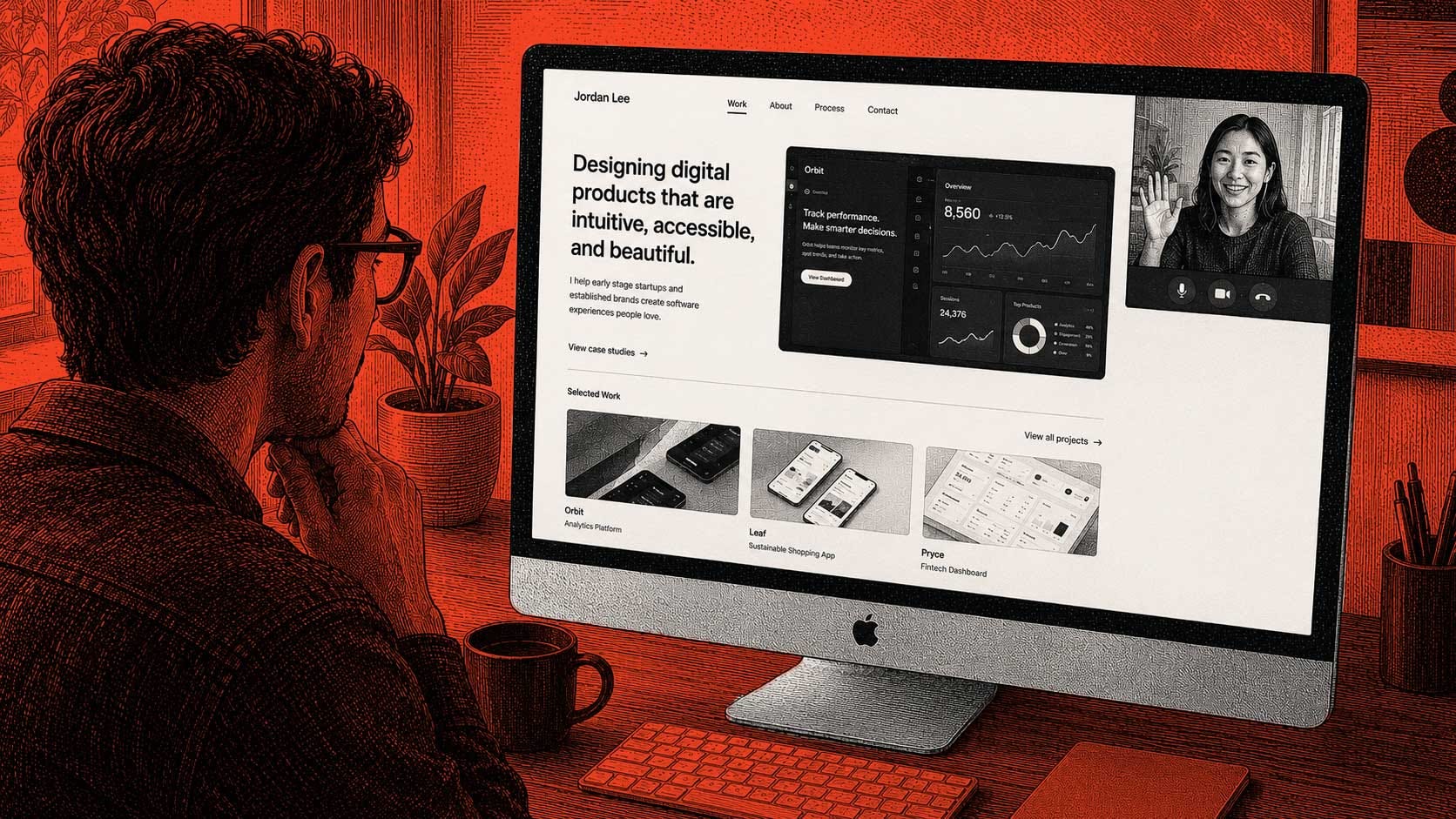
What Portfolio Club taught us about designing a great portfolio
Of everything you’ll ever design, your portfolio is the hardest to see clearly: you’re too close to judge it the way a stranger would. It’s also easy to spend your energy on styling and lose sight of whether the work itself is presented well. And before styling even matters, there’s the technical work of building the site, which stalls plenty of good portfolios in a Figma file. Claude Code and tools like it can clear that path without taking over your creative decisions, and we’ll walk through how later in this guide.
This guide draws on Design Better’s Portfolio Club critiques, where designers who’ve hired at Apple, Google, Adobe, and beyond review real portfolios on camera. Matt D. Smith, Bob Baxley, Daniel Burka, Brooke Hopper, Jared Erondu, Dan Harden, and Joey Primiani have each spent an hour with us, and their perspective runs through everything below, so you see your own work the way a hiring manager will.
Your portfolio may be the most valuable tool in your career, which matters now, with designers anxious about what AI is doing to the job market. The best answer to that anxiety is action, not reassurance. Build the portfolio. Find the job you want. Stop worrying about the changing world. Start designing for it.

Creative Leadership Retreat 2026 · Sonoma, Sept 28–29
Become a better creative leader in two days: connect with peers in roles like yours, and take fresh methods from eight leaders in film, politics, art and software who lead inspiring creative teams. You'll leave with people you can call and approaches you can use Monday.
