


Books that made us reexamine the creative process in 2025
Every year, a handful of books stick with us long after the last page—shaping how we think about creativity, culture, technology, and the work we choose to pursue. These are the books that brought us new perspectives in 2025, and why we think they’re worth your time.

Design Better is brought to you by Wix Studio, the most powerful web design platform for entrepreneurs, agencies, and creative thinkers. Learn more →
Aarron’s favorite books

Just Kids, by Patti Smith
This book paints a vivid picture of the creative explosion in New York from the late 1960s through the 1980s—when artists, musicians, poets, and patrons collided in ways that changed culture forever. What makes Just Kids special is its intimacy. The relationship between Patti Smith and Robert Mapplethorpe is tender, complicated, and deeply human. Their shared devotion to their work—and the way they supported one another through poverty, ambition, and self-discovery—is profoundly inspiring. It’s a reminder that creative lives are often built in partnership, not isolation. (It also deservedly won the National Book Award.)
The audiobook is narrated by Patty Smith!

How Music Works, by David Byrne
David Byrne doesn’t just write about music—he dissects the systems around it. This book explores creativity as something shaped by environment, constraints, economics, and community. Byrne’s ideas emerge from his own evolution as an artist and from the rise of Talking Heads, but the lessons extend far beyond music. The chapter Make a Scene is a standout, breaking down how CBGB became a hotbed of creativity in early-1980s New York. It’s a powerful case study in how places, people, and conditions combine to spark cultural movements—and there’s a lot here for designers, founders, and creative leaders to learn.

Scary Smart, by Mo Gawdat
There’s no shortage of books predicting how AI will reshape the world, but Scary Smart takes a genuinely original angle. Gawdat frames AI as our child—something we are actively raising through our values, behaviors, and incentives. He argues that AI absorbs the worst of humanity because that’s what we’ve published and rewarded online, and that it’s our responsibility to teach it better. The book blends philosophy, ethics, and a parent’s mindset to reframe an intimidating topic in a surprisingly human way. Thought-provoking, unsettling, and ultimately hopeful.

Erasure, Percival Everett
After James topped so many reading lists last year, I wanted to explore more of Percival Everett’s work—and Erasure did not disappoint. This novel (which inspired the 2023 film American Fiction) follows Monk, a writer whose creative integrity collides with the publishing industry’s appetite for stereotypes and clichés. What unfolds is sharp, funny, and deeply uncomfortable in the best way. Everett brilliantly explores how audiences, markets, and expectations can distort creative work—and what happens when an artist decides to push back by playing the game on his own terms.
Eli’s favorite books
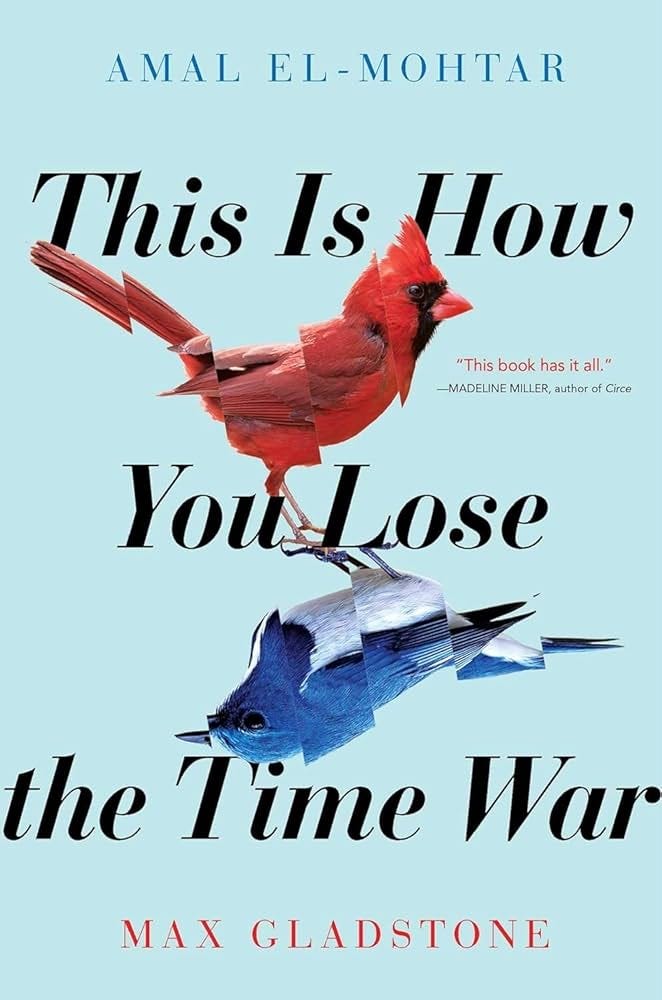
This Is How You Lose the Time War, by Amal El-Mohtar and Max Gladstone
A science-fiction book that’s written like a series of love letters between two enemies who become enamored with each other, each side written by a different author, this short novel hooked me from the first few chapters. It’s also an interesting thought experiment about humanity’s potential futures, from a machine-dominated society, to one that embraces nature to an extreme. Bonus read: if this book gets you interested in speculation about where human-computer integration and AGI might take us, Hyperion by Dan Simmons looks 700 years into the future in stories from seven pilgrims, structured like The Canterbury Tales.

All About Me! by Mel Brooks
I grew up watching Mel Brooks movies with my parents and 3 younger brothers. We’ve watched Young Frankenstein so many times, we could all probably recite the script back word-for-word. For me, Brooks’ most successful films where the ones where he had a collaborator that complemented his talents (and occasionally toned down his penchant for corniness). The book details his partnership with his friend Richard Pryor on Blazing Saddles, and Gene Wilder on Young Frankenstein. It’s an inspiring read for anyone looking to find creative collaborators.
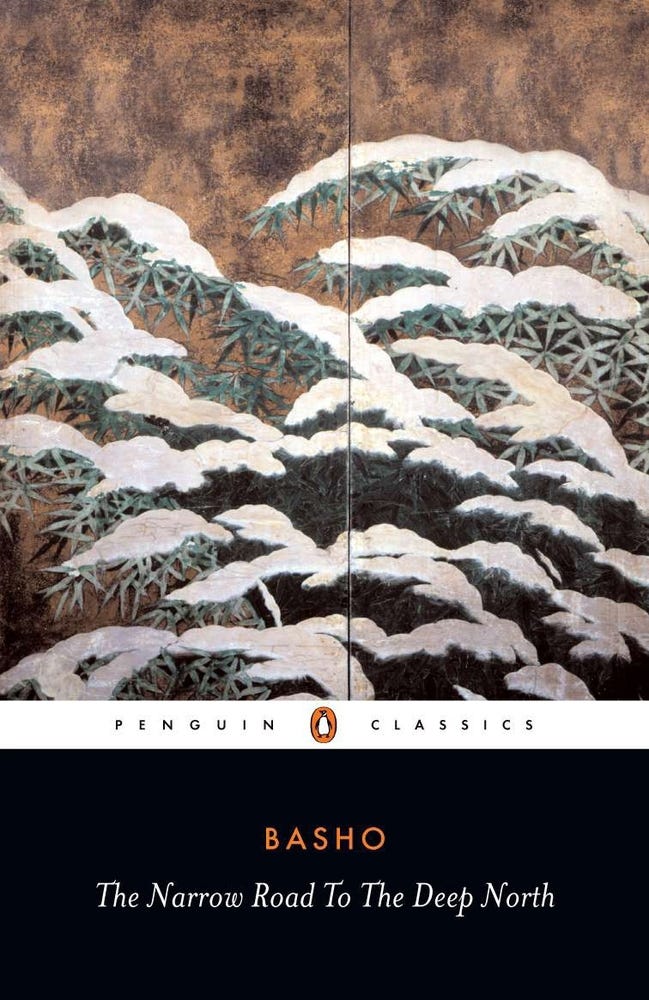
The Narrow Road to the Deep North and Other Travel Sketches, by Matsuo Bashō
This is a book I keep returning to. It’s a travelogue by the 17th century poet Bashō, who chronicled his journeys through Japan, and wrote accompanying haiku and other poetry:
On a cool autumn day,
Let us peel with our hands
Cucumbers and mad-apples
For our simple dinner.
It’s a lovely, light little book which I used to bring with me while backpacking (before kids!). If you’re looking for something to help you look at the world with all of your senses, this is a great read.
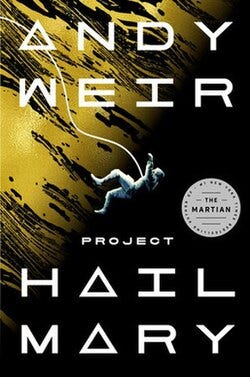
Project Hail Mary, by Andy Weir
This is a joint book pick by me and Aarron. If you enjoyed the hard-sci-fi premise of Any Weir’s previous book The Martian, and are also curious to see how he would handle an alien encounter, this is a super fun book. I’m not sure there are necessarily any creative lessons to be drawn here—other than collaborating with a creature that looks and communicates in a very different way than humans do—but sometimes we just need an escape from our daily practice. Also, the movie is coming out this March, so now's the perfect time to read it before you see it on the big screen.