


In 2011, I came into Silicon Valley as a bit of an outsider. Up to that point, I’d worked at small companies designing physical products like underwater camera equipment, and then started an underwater photography magazine. Neither was a big moneymaker (surprise!), so after our daughter was born, I thought I’d try my luck in the software design world.
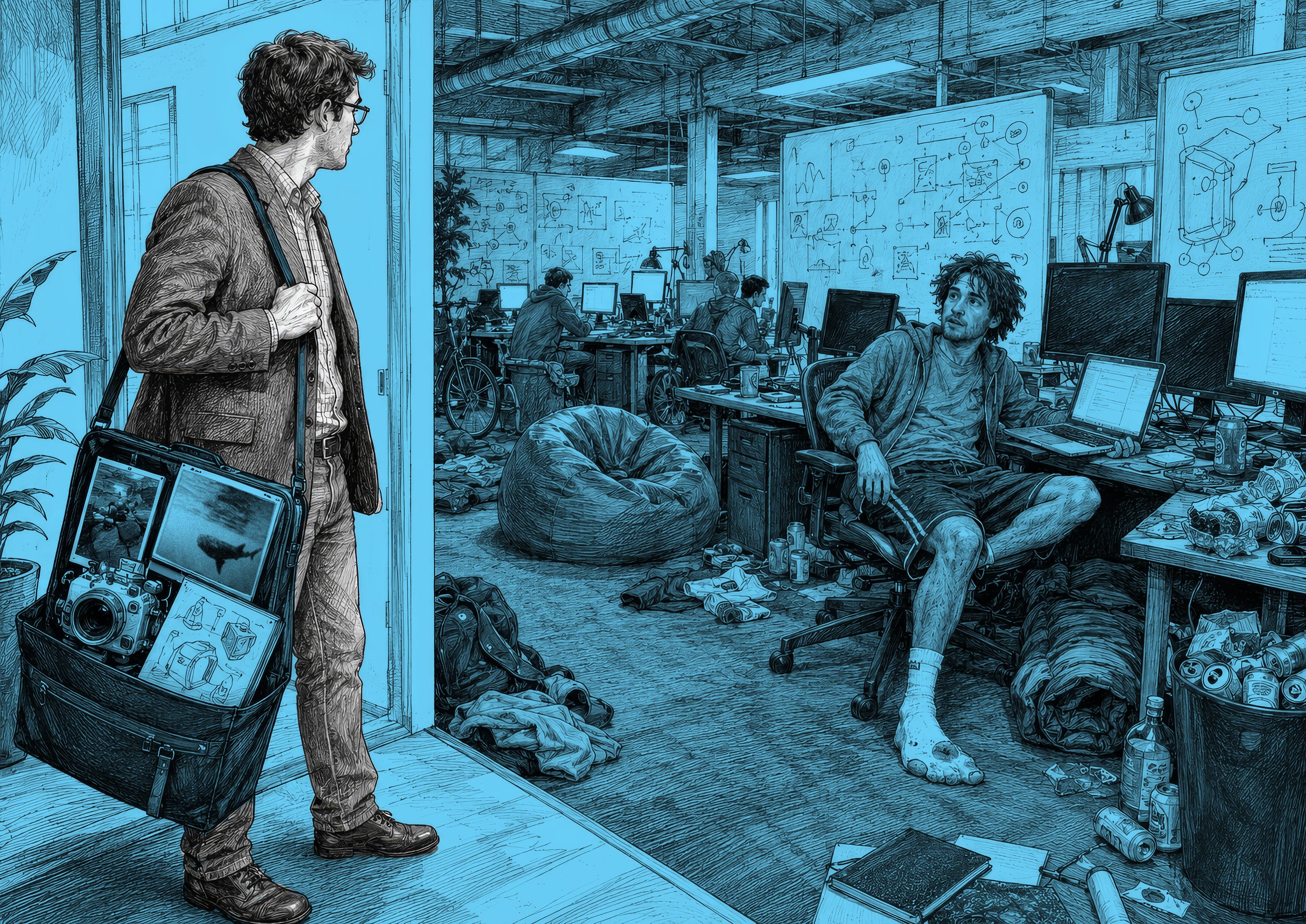
My first interview, a year prior at a quickly growing and now notorious company I won’t name, was an immediate culture shock.
“You should wear a suit,” my wife told me.
“No, too formal. I’ll wear a sport jacket and jeans,” I replied, full of my perceived wisdom.
When my first interviewer showed up looking like he’d slept under his desk, with basketball shorts, dirty gym socks, and no shoes, I knew I’d never get the job.
But I was determined to figure it out, and by the next year I got into a startup accelerator at the venture capital firm Innovation Endeavors. Eric Ries had just published The Lean Startup, and everyone in the SV ecosystem was quoting it. MVP (minimum viable product), the pivot, build-measure-learn: this terminology became the operating language of the startup world.
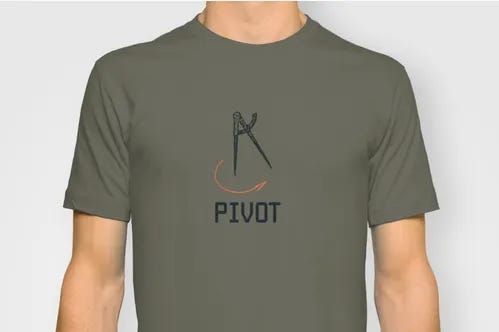
The words were useful but overused, and I like to think I was a little ahead of the curve when I designed some t-shirts poking fun at them in 2013. (HBO’s parody Silicon Valley wouldn’t come out until the following year.)
The most important product you’ll ever design
What struck me even then was how much of the Lean Startup methodology paralleled the human-centered design thinking I’d been trained on at Stanford: iterate fast, work with users, learn from failure, build empathy.
That overlap, it turns out, was no accident. Eric’s new book, Incorruptible: Why Good Companies Go Bad and How Great Companies Stay Great, is his reckoning with what happens after you build something great. A surprising amount of it speaks directly to designers. We talked with Eric about why speed was never the real problem, why the value a company creates comes from the design of its products, and why the single best way to use AI might be to refuse to let it do your work for you.
Listen to the episode
Eric Ries: Spotify, Apple Podcasts, Substack, Youtube
Already a paid subscriber? Follow this link to set up you premium feeds on Apple, Spotify or any other platform from your phone or computer.

Join Eli and Aarron September 28–29 in Sonoma for the September Work(shop) Leadership Excursion — an intimate, conversation-first gathering of forty design leaders in the heart of wine country, built to challenge how you think about your craft and the coalitions behind it. Only a handful of tickets remain.
$100 off the event for those who book their own accommodation. Use code DBFRIENDS at this link:
A second code for $15% off (also offsite accommodation) is available for Design Better premium members. Link and code after the paywall below at the bottom of this post.
Design thinking as the bridge
One of the things I most wanted to ask Eric about was the parallel between lean startup and design thinking. His answer was that the bridge was deliberate. He’d studied design thinking closely, and built relationships with its leaders, precisely because he’d noticed how much these allied disciplines distrusted one another:
“The agile thinking people and the scrum people and the design thinking people didn’t get along, and the scrum people and the DevOps people didn’t get along. I feel like there were all these people who I consider we should be natural allies fighting with each other because we have our own tribal identities and our own separate cultures.”
What lean startup offered, in his telling, wasn’t a new methodology so much as a shared language. It was a way for people who care about craft to be heard in rooms where the only accepted currency is ROI:
“If you ever tried to convince an executive that they should care about story points or burndown charts, even development velocity charts — let alone, God forbid, design integrity — good luck, right? Because they’re stack ranking by ROI. And you’re in there being like, let me explain to you why rounded corners are better for skeuomorphism. Like, what are you talking about?”
The consequence, Eric argues, is that the people who care about quality — designers, engineers, anyone with a craft — get pushed to the edge of the business conversation, their concerns treated as “parochial or almost a little bit juvenile.” And he thinks that’s exactly backwards: