



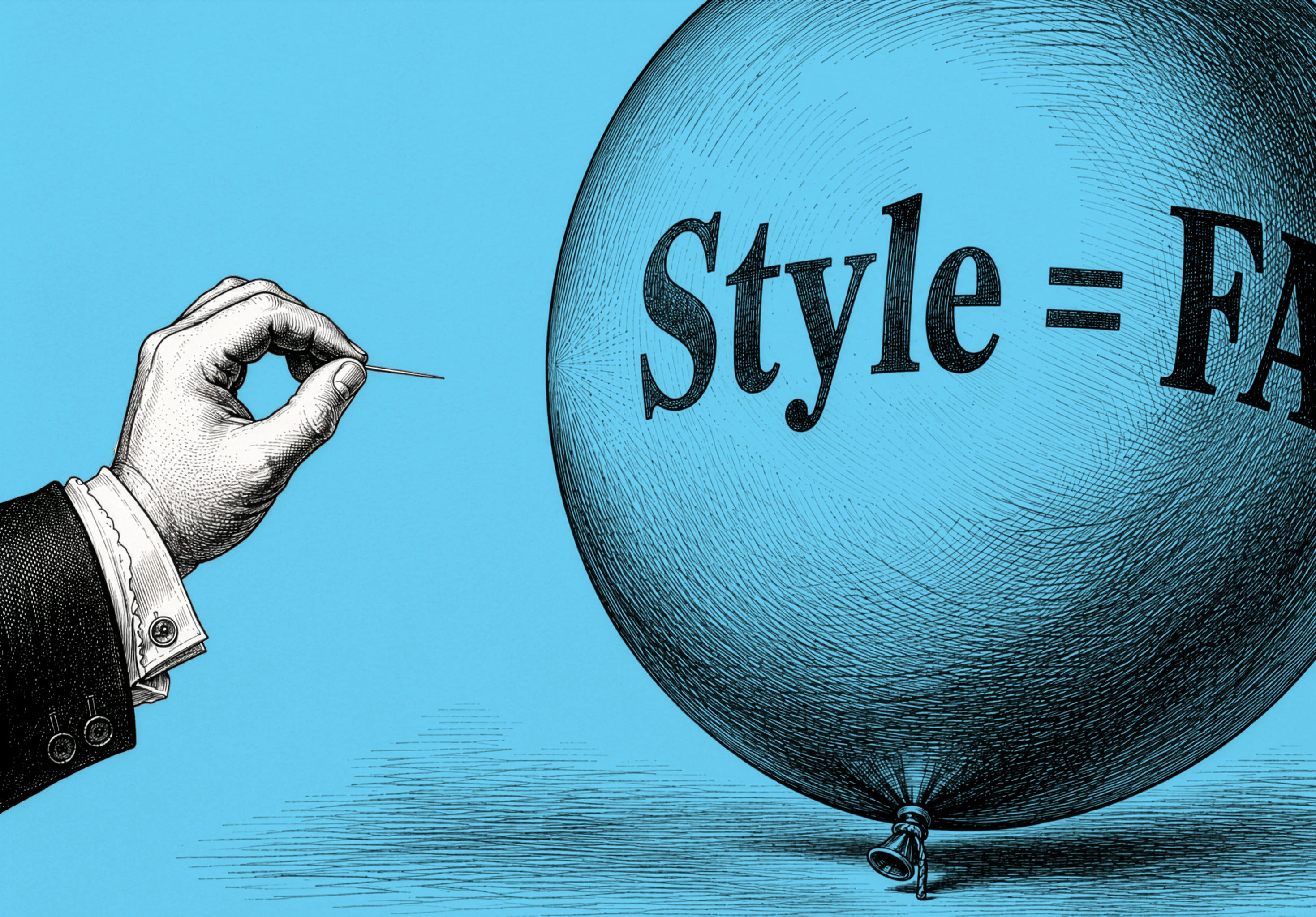
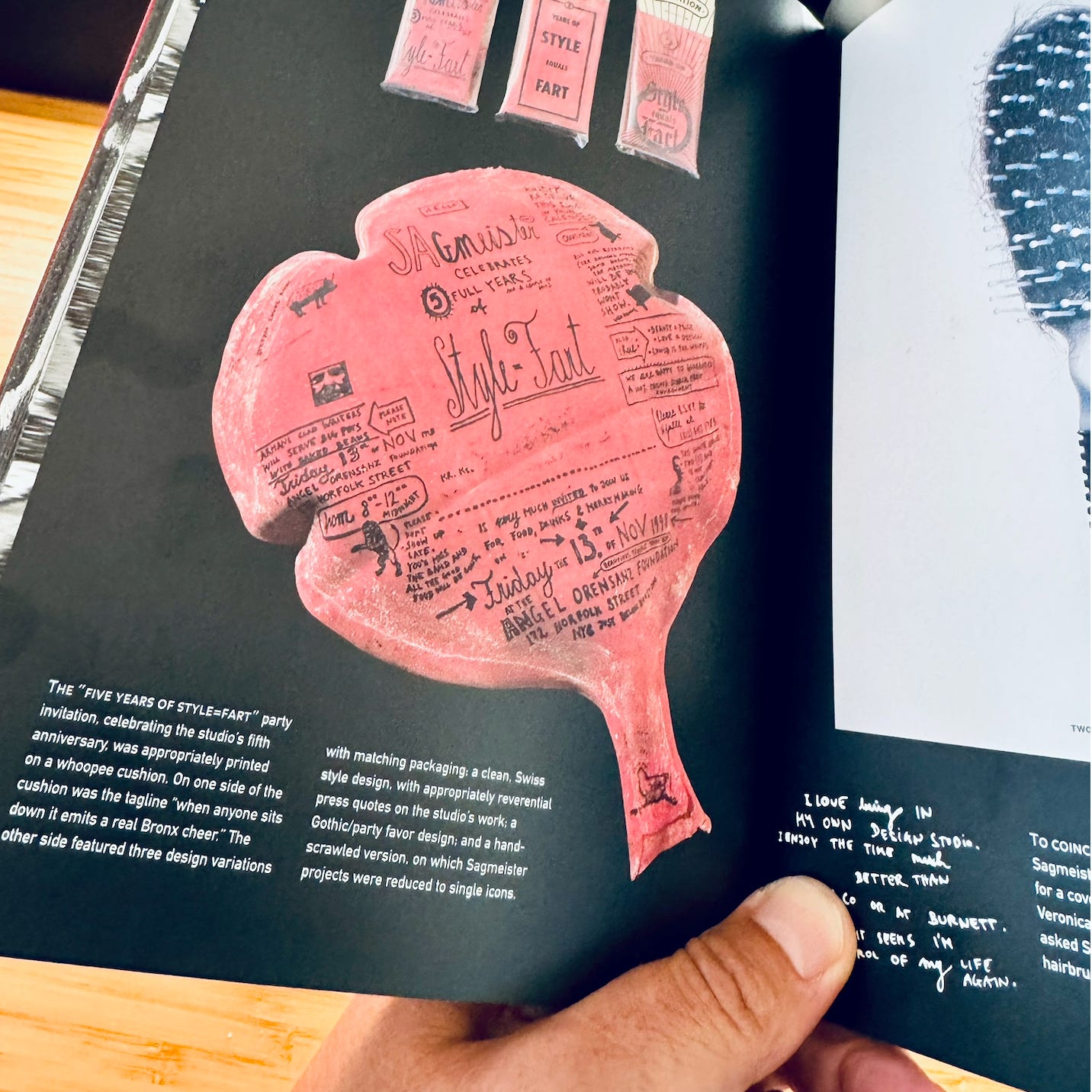
The designer Stefan Sagmeister isn’t known for being subtle. A poster he created in 1999, for an AIGA lecture he delivered in Detroit, was carved with an X-acto blade into his chest and torso. One prominent feature was a consistent motto of his, Style = FART.
He later created a whoopee-cushion with the same slogan.
So Sagmeister might appreciate our conversation with Jeff Hammoud, Chief Design Officer at Rivian, who takes a similar stance on design vs. styling.
As designers, we often put a lot of ourselves into our work. Then that work, whether its a concept, a prototype, or a beautiful comp, gets flattened on its way to the real world. Maybe your work wasn’t a car design. Maybe it was an app, a rebrand, a prototype that never survived the handoff to engineering. It comes out the other side and you barely recognize it.
Our conversation with Jeff — recorded live in Miami during Art Basel, in the Rivian Pavilion — was in many ways about how to keep that from happening. Jeff runs a design org of around 140 people spanning interior, exterior, color and materials, digital, and a dedicated studio engineering team. And the red thread running through what he told us was a provocative idea about what design even is.
Listen to the episode
Jeff Hammoud, Rivian CDO: Spotify, Apple Podcasts, Substack, Youtube
Already a paid subscriber? Follow this link to set up you premium feeds on Apple, Spotify or any other platform from your phone or computer.

Join Eli and Aarron September 28–29 in Sonoma for the September Work(shop) Leadership Excursion — an intimate, conversation-first gathering of forty design leaders in the heart of wine country, built to challenge how you think about your craft and the coalitions behind it. Only a handful of tickets remain.
We’re working on putting together some scholarships for this event. Please fill out the short form below if you’re interested:
Scholarship application form →
A code for $15% off (also offsite accommodation) is available for Design Better premium members. Link and code after the paywall below at the bottom of this post.
Constraints are the job
Jeff’s never been drawn to concept cars. To him they’re “gratuitous” — beautiful ephemera that typically never make it to manufacturing. His definition of a designer hangs on the presence of constraints:
“Can somebody design something without any constraints? Yes. And I think working within constraints is really what makes us good designers. Otherwise, we’re just stylists. Can you make a car look pretty? Yes. But can you make it aerodynamic? Can you make it meet the engineering requirements for safety? Can you make sure all the design provides good fit and finish? It’s manufacturable. How do you reduce costs in it without it looking cheap? Those are all the things that are really important as we’re looking to design a vehicle.” — Jeff Hammoud
That’s the “one rule” underneath Rivian’s process: the design team never shows something it doesn’t intend to actually build. And the way they protect that intent is structural. A dedicated studio engineering team sits inside the design org, adjacent to the designers, giving early feedback on manufacturability so the debate over what’s buildable happens before it ever becomes a fight:
“We’ll never show something if we don’t have an intent to really make sure that, if we’re saying we’re going to build this, it looks just like what we show.”
Most of us have lived the opposite. You’ve seen the stunning concept, then the production version that makes you ask, “what happened?” Jeff’s answer is that the gap between concept and reality is where design actually happens, if you’re set up to do it.
The cautionary tale
If you want to see Jeff’s philosophy proven in the negative, look at a story Tony Fadell told us about General Magic — the legendary early-’90s startup where the team that had built the Macintosh set out to build what was essentially the iPhone, but fifteen years too early.
