




A few months ago, I was on a flight to San Diego, to visit my parents. It was my dad’s birthday in a few days, and mine shortly after. He was in hospice, so I knew it was probably the last birthday I’d be celebrating with him.
I had a small book with me: Mundo Mendo, Book One. It’s the creation of Luis Mendo, who publishes a book each year which is a collection of the “best stories published on Mundo Mendo…carefully revised and adapted for the printed page.”
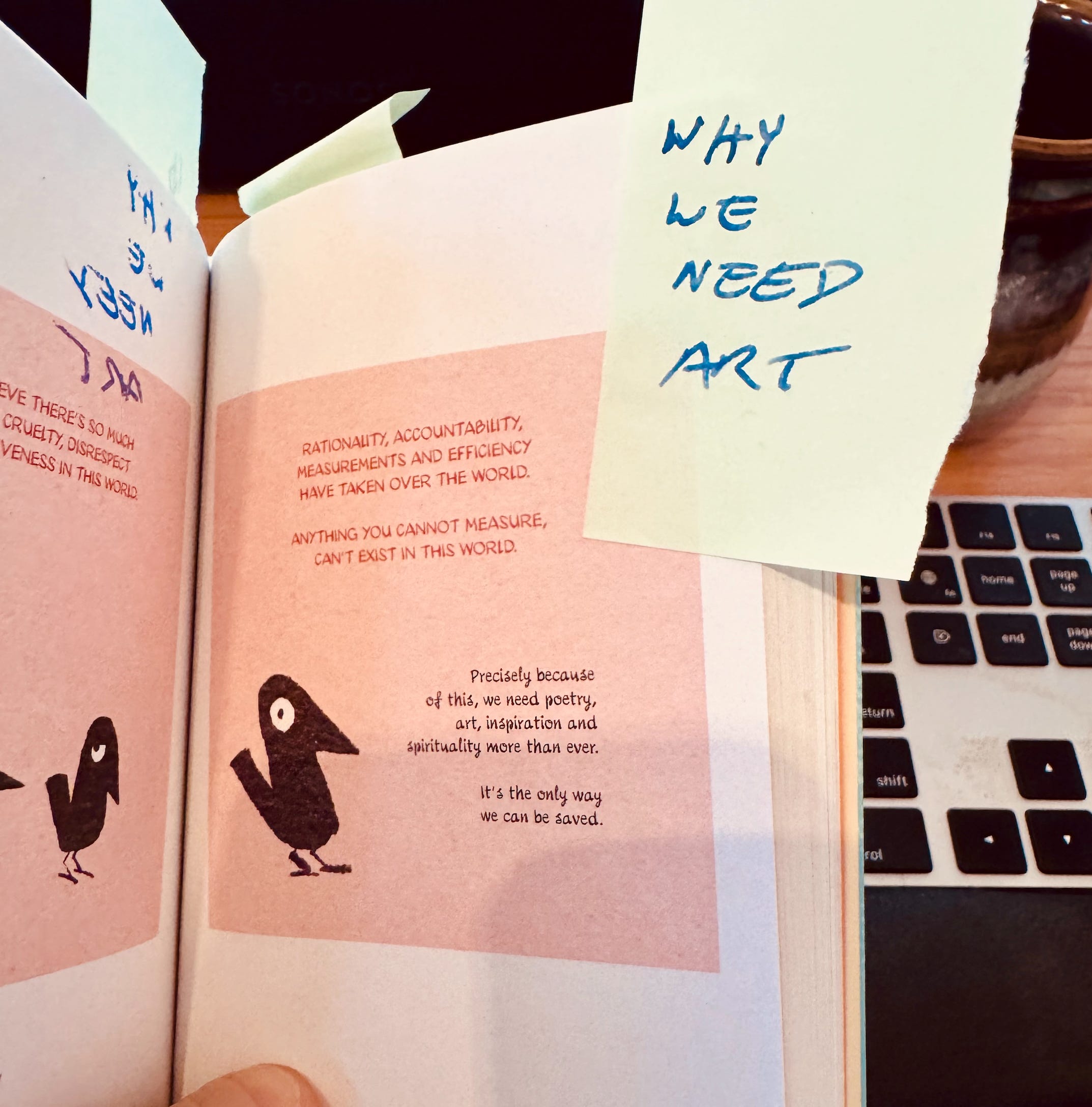
After paging through the little illustrated vignettes that Luis wrote and illustrated, I began to fall in love with his warm, human illustrations, and uplifting stories. It felt like wisdom coming from a friend who had taken a different creative path than I did. I took notes in the book on post-its with a fountain pen from my dad, which left ink imprints that made the book feel even more personal.
I’ve long been a fan of Japanese culture, ever since falling in love with the book Musashi when I was a pre-teen. So I was naturally curious about Luis’s journey, as a Spanish-born designer and creative director who burned out in Amsterdam, took a sabbatical in Tokyo, and never came back. After watching his own father’s health degraded by a stressful job, he decided to give up his career as a designer and art director, and focus on illustration full time.
Fourteen years later, his illustrations can be found on books, websites, magazines, advertising and clothing worldwide. He draws on an iPad Pro in a country whose language he still speaks only “in a very elementary way,” and is building a membership platform* that he runs on his own server because he doesn’t want to be “the ham between two breads” on Instagram.

His book, which he printed standing at the foot of a press personally adjusting the cyan and the magenta, is a small, sturdy object designed to be carried in a jacket pocket. You can lick it, he notes (though, you may not want to!).
Here are five ideas from the conversation that stayed with us.
*Design Better subscribers can get 20% off a membership to Mundo Mendo, which includes a book every year: dbtr.co/mundomendo

Meet Crafted, the evolution of UserTesting’s Human Insight Summit — designed for teams who intentionally build with customer insight at the center. In Seattle, Eli Woolery will host AI & Design Thinking, a hands-on workshop exploring how generative AI can sharpen (not replace) your creative process.
Secure your spot at events.usertesting.com/crafted with code DesignBetter100 for $100 off workshops.
May 28th: Seattle, September 17th: London

The Most Extensive Research on Embedded UI/UX
Embedded design — UX/UI for appliances, cars, and other physical products — is a real challenge with the tool stack web and mobile designers use.
Qt — pronounced “cute” — surveyed over 400 UX/UI designers working in the embedded design to learn how the tools and processes are falling short.
If you work in embedded design, or you’re just curious what that world looks like, download their research for free.
LLMs Are Just a Calculator
There’s a lot of anxiety in creative communities about AI. Luis has a different frame.
“I realized that this thing is just a glorified calculator. It’s nothing else. And I think we should stop saying AI. We should say LLMs. The AI, artificial intelligence still doesn’t exist. What you have is LLMs — they are language learning models and they are just trying to guess things and connecting things with each other.”
He uses LLMs for things he describes as “taking my time from drawing, taking my time from writing poetry, taking my time from smelling the flowers” — like automating the spreadsheet that logs book orders. For grammar checks in English, a language he writes in fluently but didn’t grow up speaking. For translation between Spanish, Dutch, and Japanese.
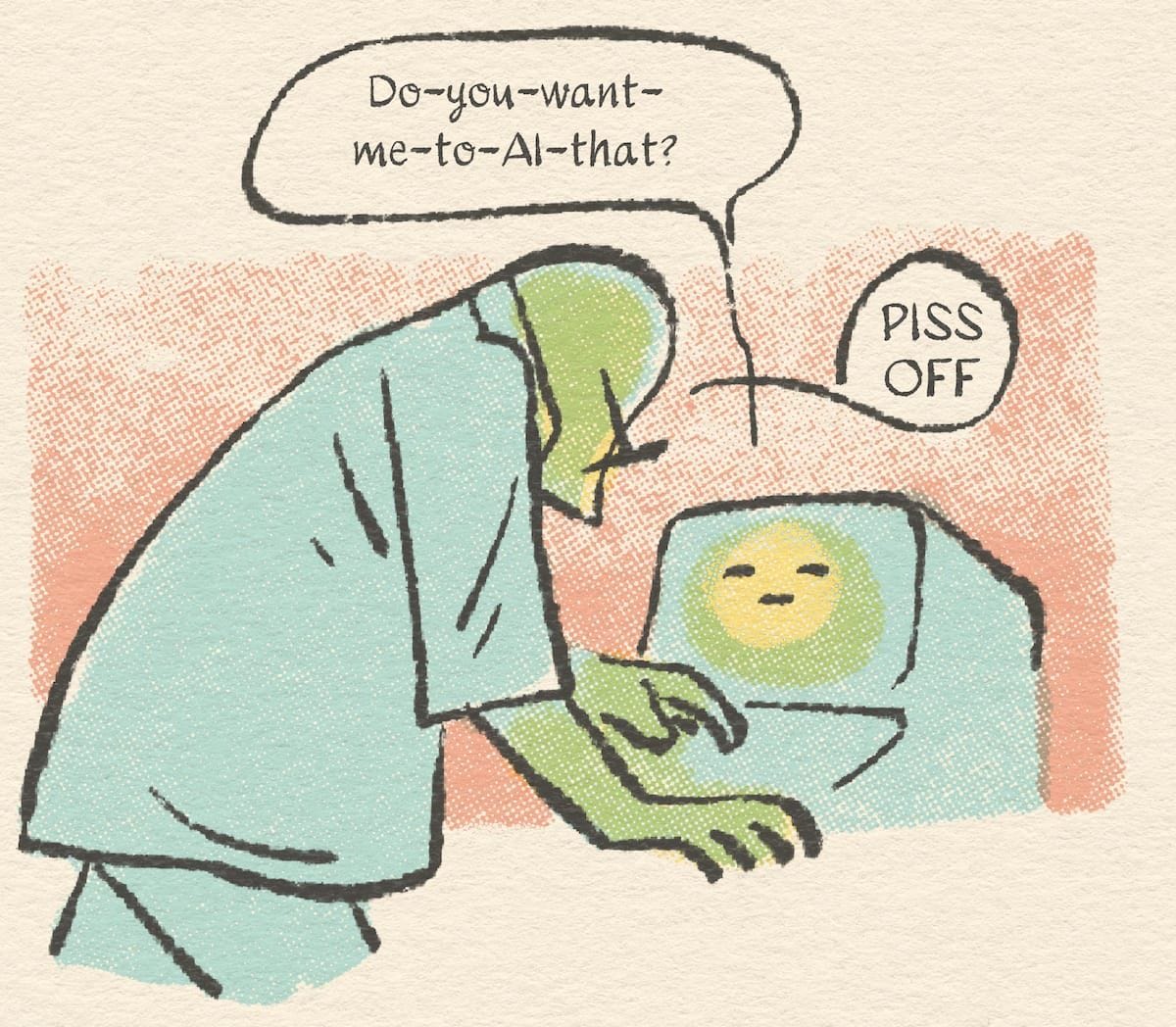
He was struck by something he’d heard recently: give the same prompt to five LLMs and you get more or less the same answer. Give the same sentence to five filmmakers and you get five different movies. That gap is where human creativity lives, he argues, and it’s not closing anytime soon.
Shokunin: Do It Well, or Don’t Do It
The Japanese concept of shokunin doesn’t have a clean English equivalent. It’s often translated as “artisan” or “craftsman,” but the word carries something more — a refusal to cut corners that isn’t about perfectionism, so much as about the intrinsic meaning of doing something well.
