



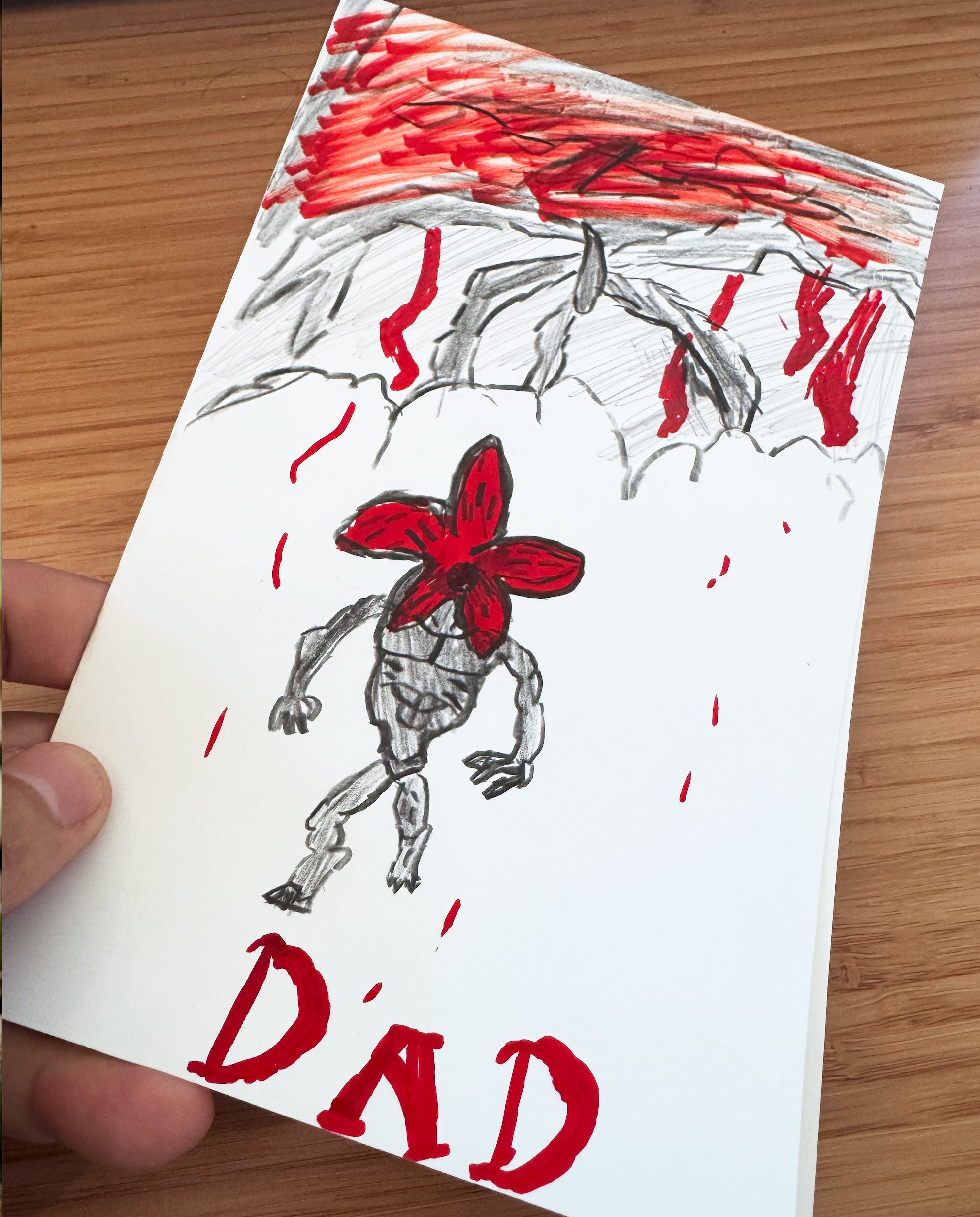
Yes, I’m a Stranger Things nerd. As I mentioned in our recent interview with Stranger Things writer Paul Dichter, I watched the series myself, and then with my daughter when she was old enough, and most recently with my son. If you need any further evidence, just check out the birthday card my son created for my 50th birthday this year, which features a demogorgon and mind flayer, two of the shows iconic creatures.
And if you can get past our nerd factor, Aarron and I learned quite a few things from our interview with Paul, that apply not only to film and television writing, but to the collaborative efforts of any design or creative team out there.

Meet Crafted, the evolution of UserTesting’s Human Insight Summit — designed for teams who intentionally build with customer insight at the center. In Seattle, Eli Woolery will host AI & Design Thinking, a hands-on workshop exploring how generative AI can sharpen (not replace) your creative process.
Secure your spot at events.usertesting.com/crafted with code DesignBetter100 for $100 off workshops.
May 28th: Seattle, September 17th: London
Every Creative Team Needs Its Skeptics
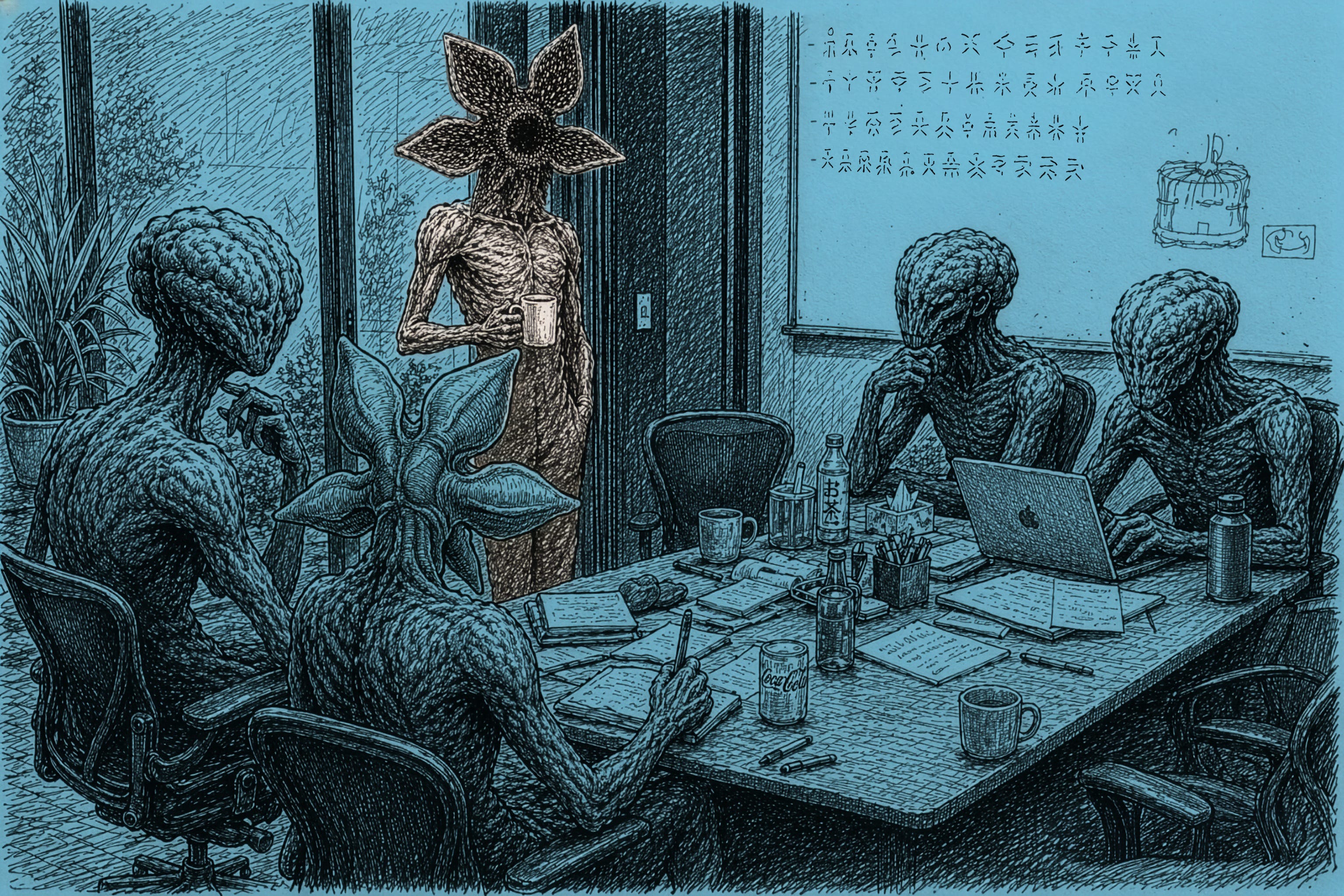
Paul spent a decade in a small, tight-knit writers’ room — rarely more than six people around a table, in rented houses, with whiteboards and snacks. What strikes him most, looking back, is how clearly different roles emerged, and how essential each one was.
“I think inevitably in this process, you do end up feeling like you’ve got different camps — and one camp is the people that you have to convince, the skeptics. And another camp is the enthusiasts who want to make everything work. I’m definitely an enthusiast. Someone has an amazing idea and you just become obsessed with it... And then you have kind of the big-picture, macro, vision-of-the-whole-board brain, which is able to look at that and be that “Kill Your Darlings” fearless voice of, yes, it is an amazing idea, an amazing character, an amazing moment, but it doesn’t belong here because it slows the story down too much.”
This maps almost exactly onto how strong design teams function. The enthusiast generates energy and possibility. The skeptic prevents the team from falling in love with their own ideas. The big-picture thinker holds the vision steady when the details get chaotic. The mistake many creative teams make is trying to homogenize these roles — to turn everyone into a collaborator who agreeably builds on every idea. The Stranger Things room worked, Paul suggests, because the tension between these roles was embraced rather than managed away.
