



When I was in college, I took a great printmaking class with the artist Enrique Chagoya. There were no assignments — he just taught various techniques, we’d present our work, and he’d offer a helpful critique afterward.
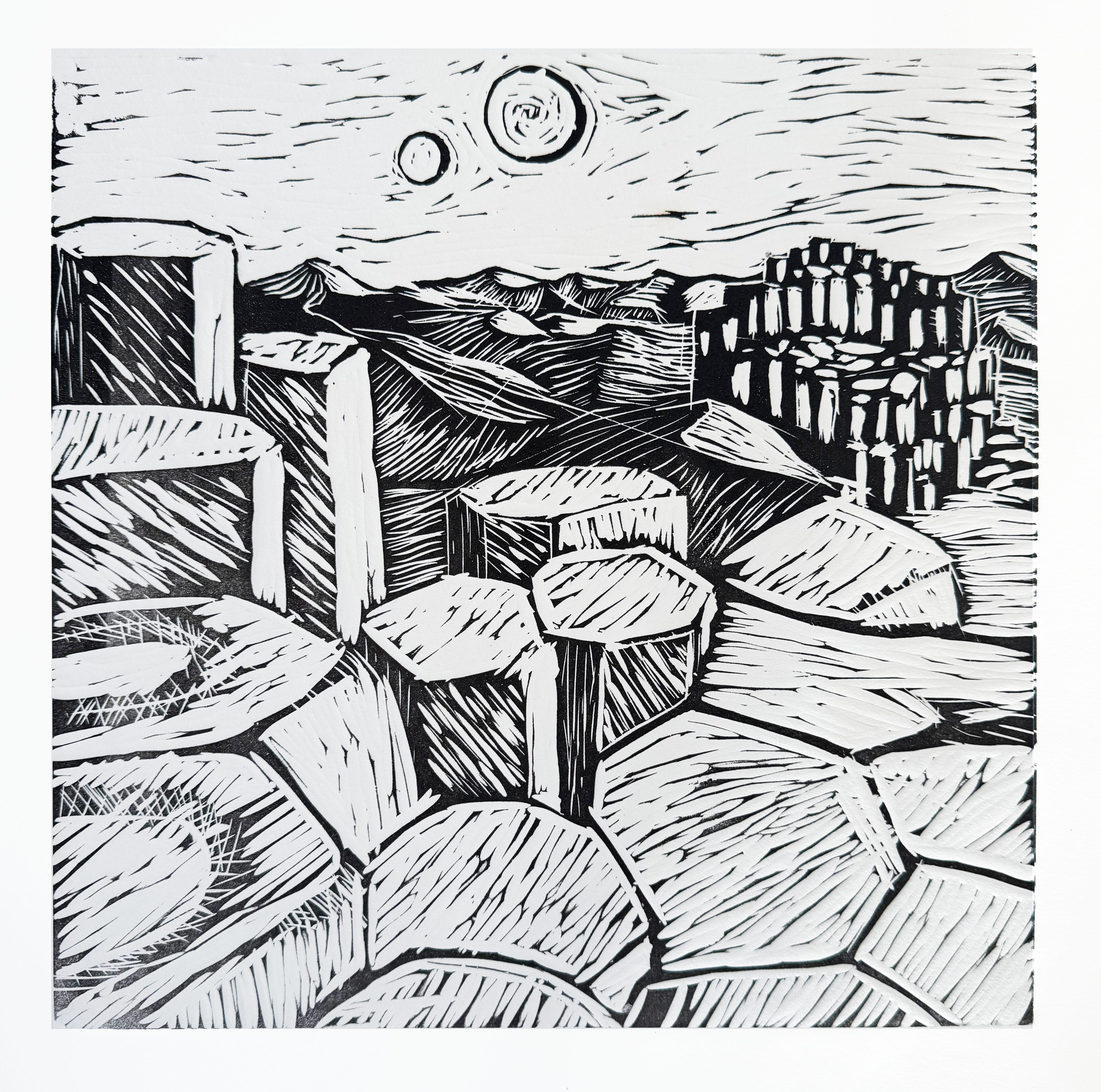
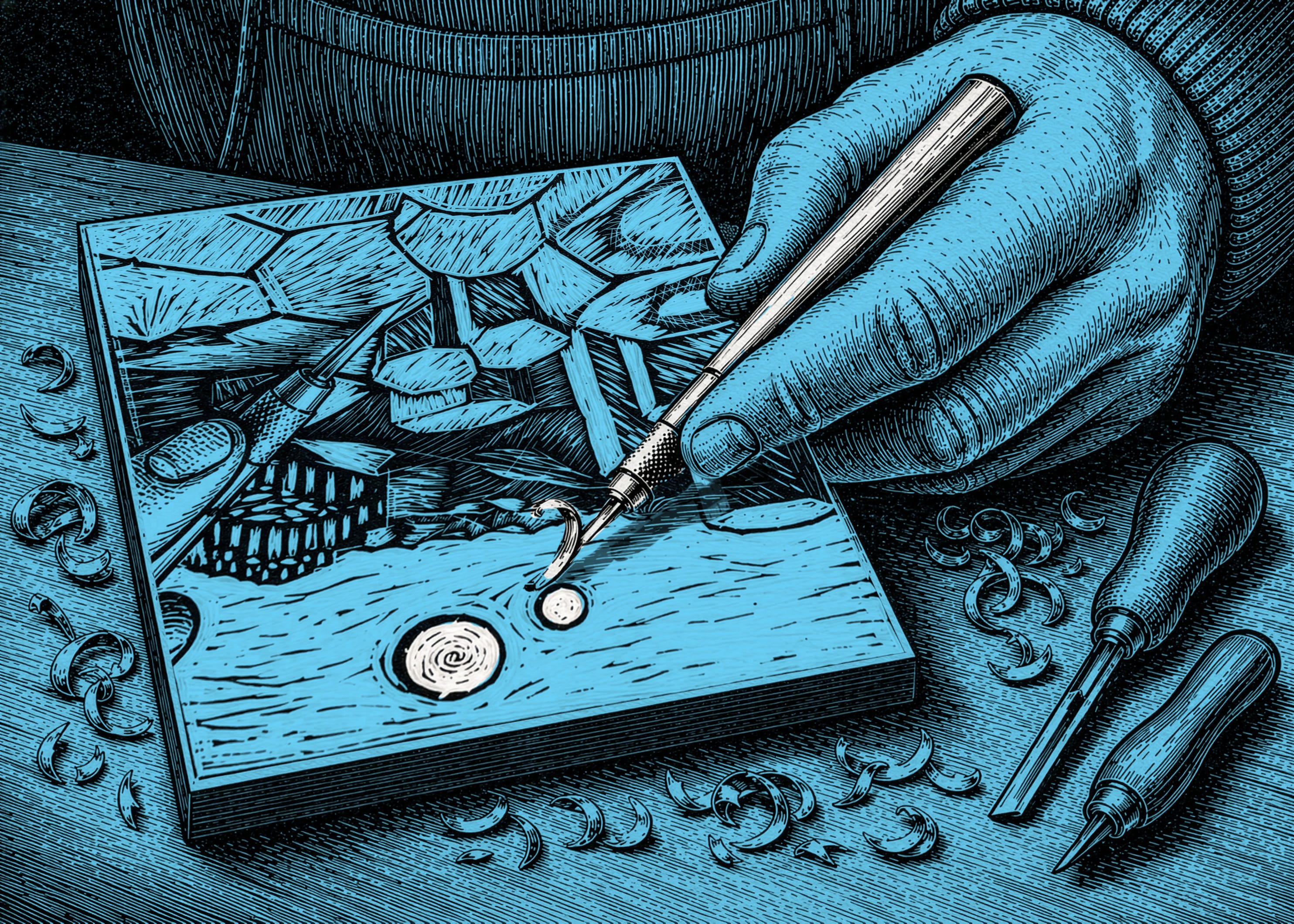
One of the many wonderful things about printmaking is the physicality of it: using a cutter to gouge out little strips of linoleum, inking the block with a roller, running it through the monotype press.
When pushing the gouge through block material, if your hand slips, you’ve ruined the line you spent twenty minutes sketching out. It’s slow. It’s a little dangerous (well, you can cut yourself). You can’t undo it. And that resistance is what makes the finished print feel like it came from somewhere. The mistakes can often make the finished work more interesting.
We tend to treat friction as a defect. Much of modern design has been about sanding it down: fewer steps, fewer decisions, less waiting. But the more I’ve made things by hand, the more convinced I am that friction isn’t the obstacle to meaningful work. It’s often the substance of it.
Carving a linoleum block with my daughter Phoebe around 10 years ago
That idea came up during our conversation with Ian Bogost, game designer, writer at The Atlantic, and author of the new book The Small Stuff. Ian has spent his career studying the designed life of ordinary things, and his book is essentially an argument for engaging with the small, textured, slightly effortful moments of daily life with curiosity and openness. It’s different than friction, though: he calls it gratification.
Listen to the episode
Ian Bogost: Spotify, Apple Podcasts, Substack, Youtube
Already a paid subscriber? Follow this link to set up you premium feeds on Apple, Spotify or any other platform from your phone or computer.

Join Eli and Aarron September 28–29 in Sonoma for the September Work(shop) Leadership Excursion — an intimate, conversation-first gathering of forty design leaders in the heart of wine country, built to challenge how you think about your craft and the coalitions behind it. Only a handful of tickets remain.
$100 off the event for those who book their own accommodation. Use code DBFRIENDS at this link:
A second code for $15% off (also offsite accommodation) is available for Design Better premium members. Link and code after the paywall below at the bottom of this post.
Friction and gratification
Holding a warm, hand-thrown coffee mug in your hand. Sharpening a carpenter’s pencil with a pocket knife. We usually treat the moments of sensory satisfaction that Ian calls gratification as rare, something you have to work yourself into a special state of mind to access. Ian argues the opposite. They’re not scarce at all. They’re everywhere, and the only thing standing between us and them is attention.
“One of the things I try to do in the book is to reframe that idea of, call it mindfulness, or noticing, into something that’s more like acceptance — just accepting these sensory gifts that the world is always delivering to you. And that transforms them from something scarce into something excessive. There’s just a surplus of them all the time. If you miss one, it’s no big deal, because another one will arrive right at its heels.”