



How beliefs make or break us
Nir Eyal is a familiar voice on Design Better and someone whose work has become essential reference across hundreds of design teams. His book Hooked taught us how to build habit-forming products. Indistractable taught us how to escape the ones that were eating us. And his latest book Beyond Belief argues both of those books were missing a third side of the equation and that without it, even the best behavior-design playbook quietly fails.
We covered a lot of ground with him in our recent interview with him, but three ideas stayed with us. Here’s how we think they apply to the work designers and tech pros are doing right now including how AI is reshaping our creative identity.
Listen to the episode and join the conversation
Nir Eyal: Spotify, Apple Podcasts, Substack
Already a paid subscriber? Follow this link to set up you premium feeds on Apple, Spotify or any other platform from your phone or computer.
Join the conversation about this interview in our chat room. →
1. Motivation is a triangle. Most of us are working with two sides.
The model Nir and most of behavior design have operated with for over a decade is a straight line: you want a benefit, you do the behavior, you get the result. It’s the logic underneath BJ Fogg’s B=MAP equation, most of the personal-development industry, and frankly every “just build the habit” article in our feeds.
It’s also why your bookshelf is full of advice you’ve never used.
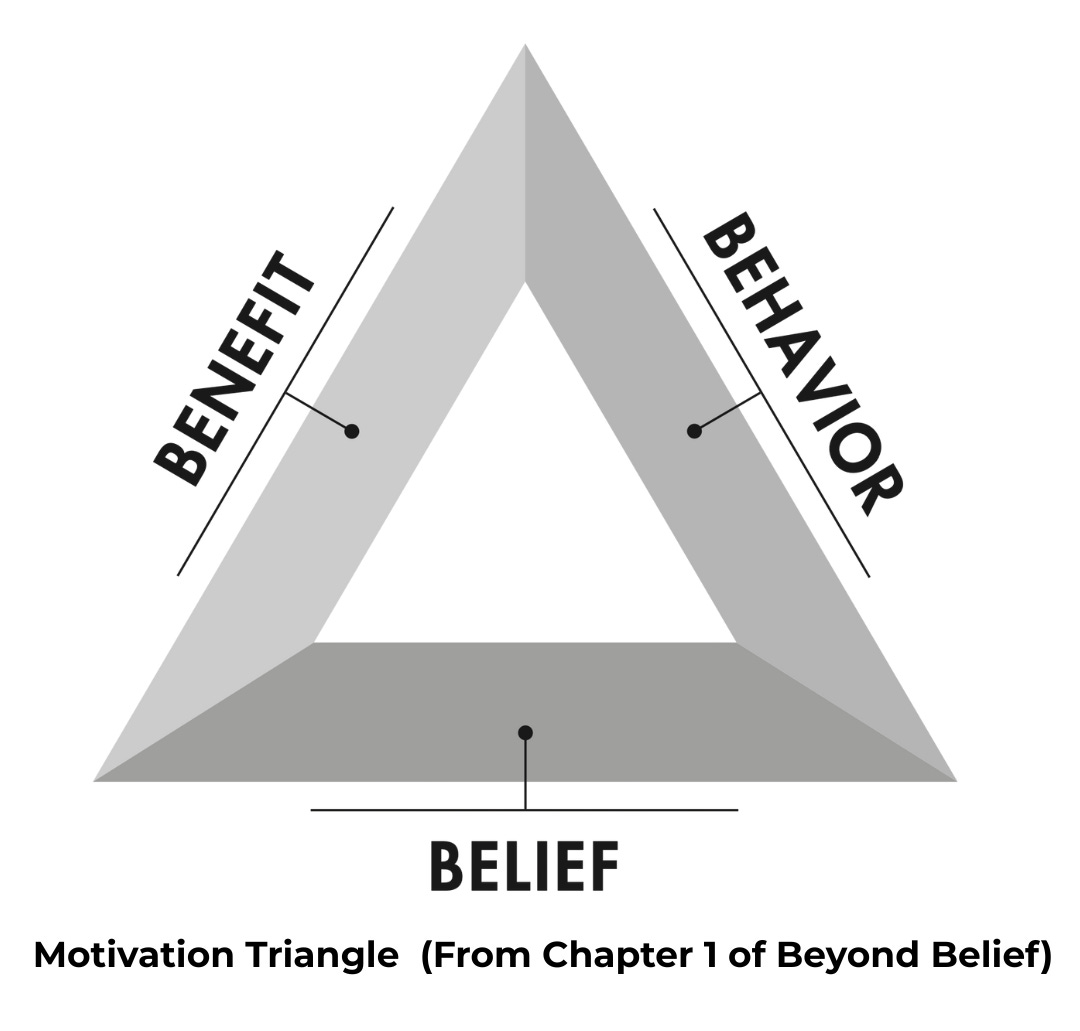
After years talking with Indistractable readers who’d done none of the exercises in his book, Nir concluded motivation isn’t a line. It’s a triangle, and the third side is belief. If you don’t believe your manager will follow through on the promotion, the benefit doesn’t motivate you. If you don’t believe you can ship the redesign, the behavior won’t stick.
“Beliefs are tools, not truths.”
—Nir Eyal
James Clear gestured at the same idea with identity-based habits — become the kind of person who… — but Nir argues the belief itself is the leverage point. If the belief isn’t there, the system collapses no matter how clever the trigger.
Every change-management problem you’ve ever run into at work is fundamentally a belief problem. Stakeholders don’t act on research they don’t believe is real. Teams don’t ship work they don’t believe in. We’ve been treating these as communication problems for years. Nir would say we’ve been working on two sides of a three-sided structure.
2. Your belief about AI is a choice. Make it a useful one.
We asked Nir which beliefs designers should hold onto and which need reframing as AI reshapes our work. His answer reframed the question itself.
Both predictions about AI — that it eliminates jobs and that it creates extraordinary opportunities — are likely true, he said. Neither is a fact yet. Which one you choose to believe isn’t a forecast. It’s a position.
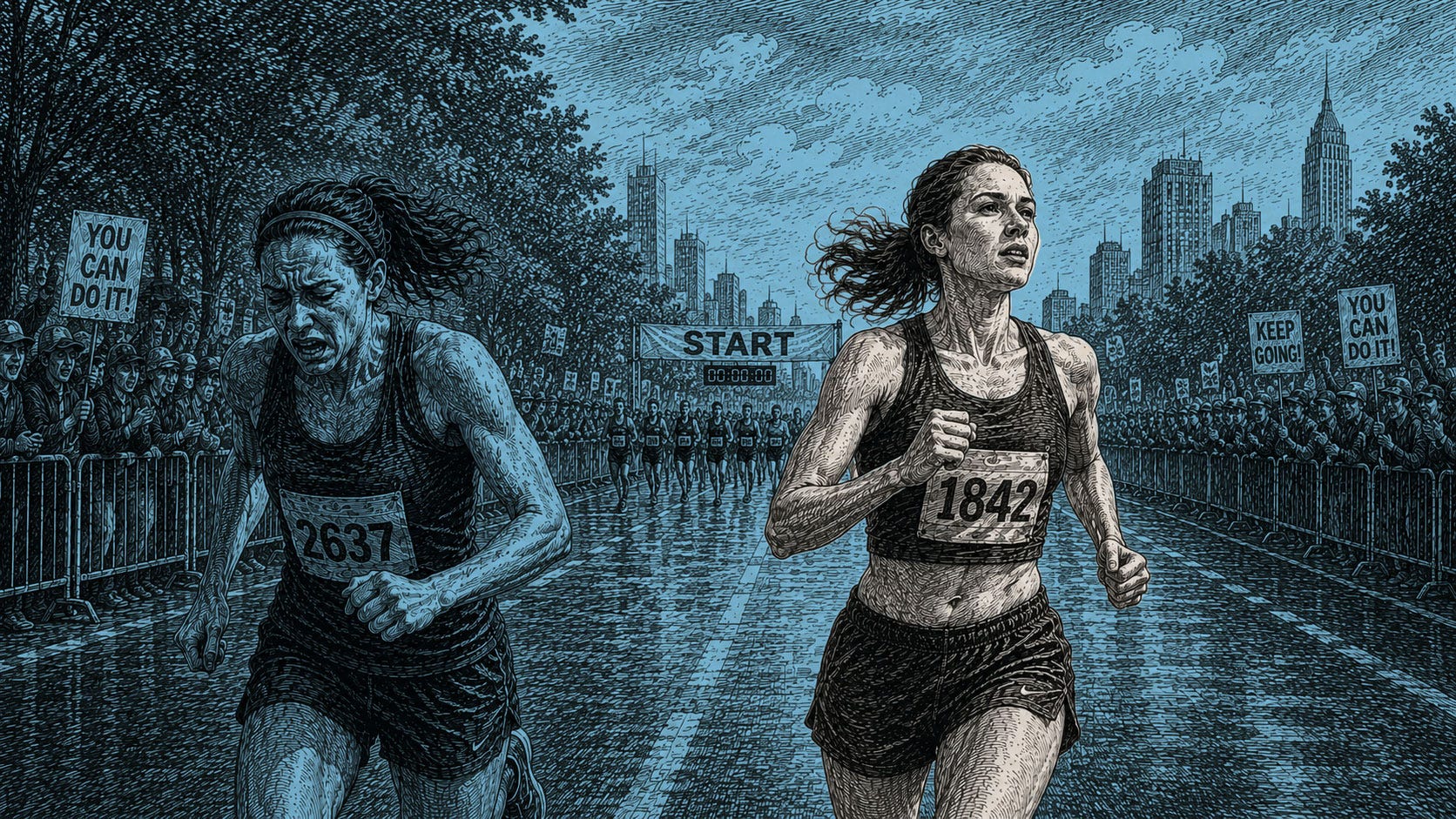
Nir offered a metaphor to help us understand the role belief plays in times of change and turmoil. Imagine two-identical-runners with the same physical training, same lung capacity, same legs. One believes she can finish the race. The other doesn’t. Where do you put your money?
“Perseverance does not guarantee success. But quitting guarantees failure.”
The neuroscience backs this up. Yale longevity research found that people with a positive view of aging live 7.5 years longer on average — a bigger effect than diet, exercise, or quitting smoking. Not because of magical thinking, but because beliefs route through behavior. The person who believes growth is possible at any age volunteers, gardens, calls a friend. The person who believes aging is decline stays on the couch.
