


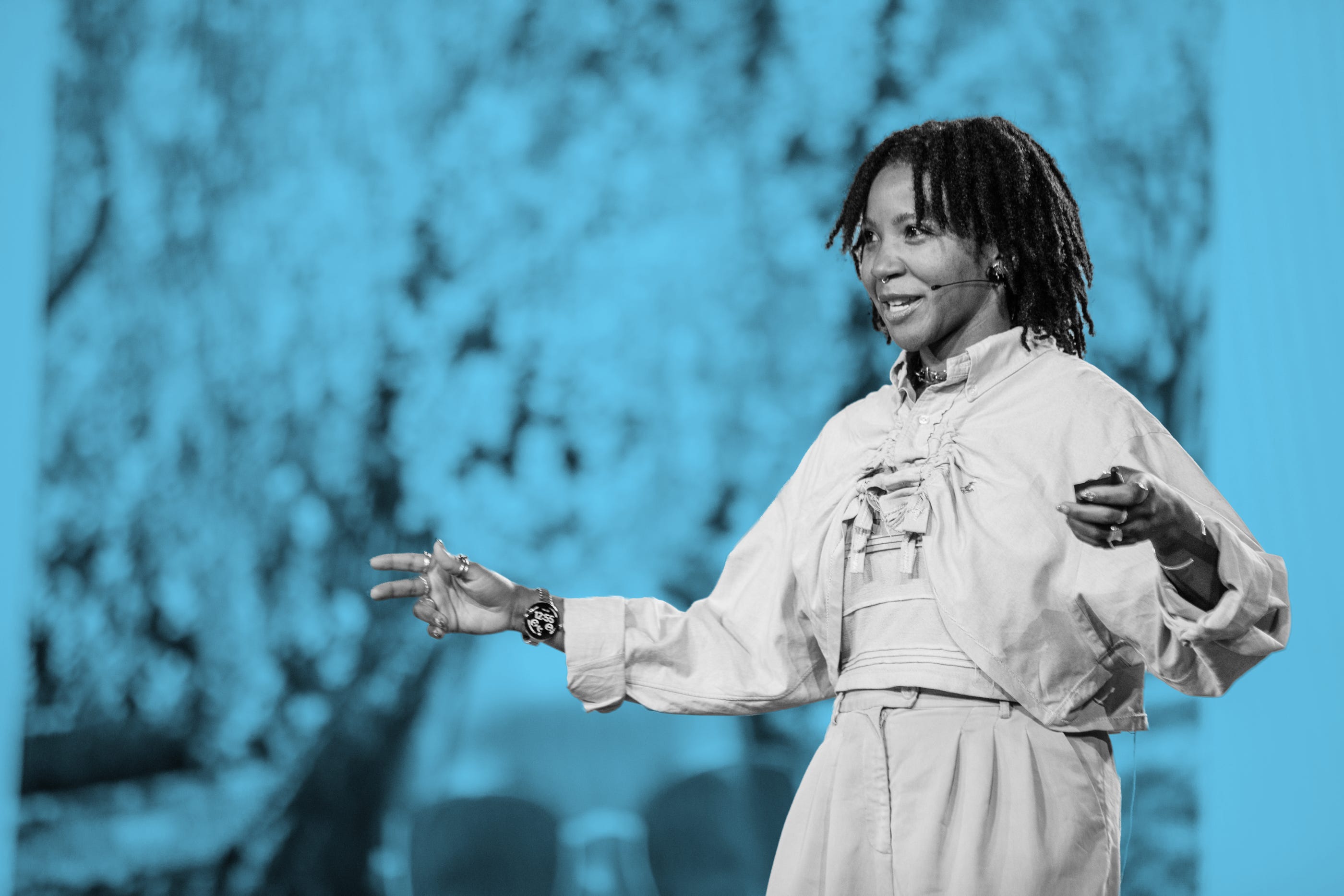
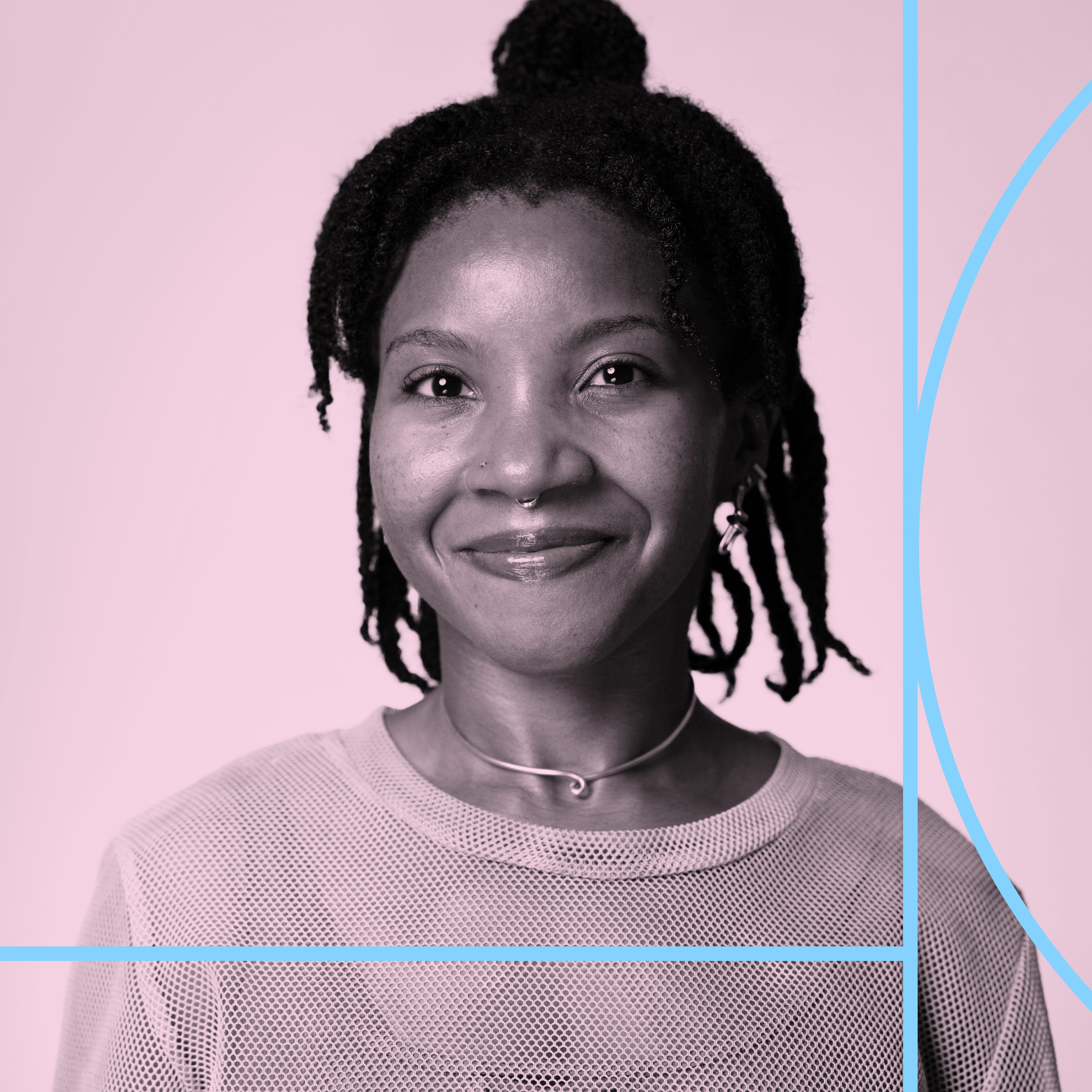
Catt Small is a Staff Product Designer at Dropbox, the author of The Staff Designer: Grow, Influence, and Lead as an Individual Contributor (Rosenfeld Media, December 2025), and the host of the Catt’s Corner podcast. She’s sixteen years into a design career that started in Photoshop and Notepad++ — which is why, when she looks at the anxiety rippling through the design community right now, she doesn’t see an unprecedented rupture. She sees a field that briefly forgot how much it used to change.
We spoke with Catt about why this round of tool churn feels more frightening than past ones, especially for designers who came up entirely in Figma. We then talked about career ladders as a negotiation rather than a fixed object, where the optimism in the field is coming from, what her game development background brings to her work, and the origins of both The Staff Designer and the Catt's Corner podcast.

This special edition of The Roundup is brought to you by Shift UX 2026, a new conference from Rosenfeld Media on the future of UX — September 24–25 in New York City and online. Learn more →
UX is having an identity crisis — and that’s exactly why you should be at Shift UX 2026. Join us September 23-25 in NYC or online for a conference built for a moment when “UX” is pivoting from job title to mindset — one hat will ihave impact in ways and settings we’ve not imagined before.
Hosted by Rosenfeld Media, Shift UX brings together designers, researchers, product managers, content designers, and anyone responsible for experiences. We’ll dig into four practice pillars — systems-level thinking, research as strategy, human-centered tooling, and operations as orchestration — through sessions and activities with speakers like Catt Small and Jesse James Garrett. You’ll learn how to keep humans in charge as AI lands in every product and org chart.
Grab your ticket at https://shiftuxconference.com/ and use code DesignBetter75 for $75 off.
Eli Woolery: You’re delivering the keynote at Shift UX, and your premise is that UX has changed before — and that it’s in a period of pronounced change right now. Give us the highlights.
Catt Small: I’ve been in design — this is year sixteen for me. Initially I was a web designer. That title is still used now, but it means different things at this point. My first tools were Photoshop and Notepad++, if anyone remembers that. Now I work in Figma, and there are lots of other tools coming out of the woodwork.
I’m essentially going to assert that stability has actually been the exception for this field. Within my first decade or so of working in design, there were so many moments where the tooling constantly was changing. We had Axure and a bunch of wireframing tools for a moment. We had Sketch, which some people still of course use, and Figma. And we also had a period of prototyping in code back in 2013, 2014, 2015. I remember the should designers code conversation, if y’all remember that.
So for me, the norm is actually change. I’m seeing a lot of people saying we’re cooked and everything is going away. And I actually want to assert that we got really comfortable — and that’s not a bad thing or a good thing. It’s just that we had a moment where people all agreed what it looked like to create digital products, and now we’re realizing there might be other ways to do it. That’s really scary, but it also comes with a lot of opportunity. You might actually have the chance to design what your job looks like more, and to have the career ladder become more of a conversation.
Aarron Walter: In past shifts I mostly saw excitement — designers like new tools and new trends. This time what I see is anxiety: I’m not going to be able to keep up, and I feel very vulnerable at work. What have you noticed about designers’ outlook?
Catt: I’ve seen a lot of designers get used to being told what the expectation is rather than bringing their own opinion. And part of that most likely relates to the fact that for a moment we had all agreed what it meant to design, what the product development lifecycle looked like. We had the double diamond and we had the tooling.
Now we have AI, we have all these different options. We have the canvas, or do you just prototype? Should designers code 2.0 is here. Some people are senior designers and they’ve been working for six years, and six years ago was a point where everybody was using Figma. So this moment is very terrifying for those people who literally came up only using Figma.
You have a lot of people who are just terrified, and they’re very used to their companies having to define the career ladder and explain what it means to be a good designer. Now we all have to tell companies what that is. So in some ways we’re back to the conversations about the ROI of design, or design advocacy, and all the design maturity conversations. Time is a bit of a circle. Things are different this time, but I feel shades of prior conversations.
For those of us who have been around for a while, it’s like, okay, got it. We have to be scrappy and ready to experiment and view this as a series of scientific explorations, and that’s how I’m treating it.
But there is the reality, which is these are jobs. People are nervous that this change means they won’t have a job moving forward. Or maybe they might be mourning the version of the job they thought they were going to have. And that’s also very real, and I want to acknowledge that. But if you want to keep doing design work in the near to long-term future, adaptability is a required skill, and everybody is going to be building it right now.
Eli: A lot of people think of a career ladder as a fixed object you climb, hand over hand. You’ve stayed largely on the IC track — it sounds like you see it as more flexible than that.
Catt: Jobs have always been a conversation. Of course there are times where leadership notices there’s a gap and the job is very clearly defined. And then there are moments where people aren’t really sure and they look to you — especially if you have some experience — to tell them what they need, because you’re closer to the work.
This is a shift I’ve had to nudge a lot of designers for, especially designers who go up the ranks from senior to staff. There’s this expectation when you’re a senior or a mid-level or a junior designer that the job is defined for you, you are told what to do, you do that. There’s a lot of security and safety in that. But there’s usually a maximum level that you’ll get to when you operate that way.
When you start to actually tell leadership what you think needs to happen, and you do that in a way that helps them make informed decisions, then that is leadership. It’s just a different kind of leadership than what you’re used to.
Senior leaders know a lot of things. That said, they don’t know everything. So it is on us to highlight what potential opportunities there might be that they’re missing. You can have that conversation, or you can not and let that drop. That is an explicit choice.
And literally this moment we are in right now — you can either be apathetic and say, I don’t know, I’m just going to get fired. Or you can say, okay, how does this change how I work, and how can I ultimately create better outcomes for people by using these tools? I’ve helped build career ladders at most of the companies I’ve worked at, at least in the latter half of my career. So I’m very used to this idea that I’m not being told what to do. I’m helping other people make informed decisions.
Aarron: It’s not all pessimism. What do you see from the designers who are genuinely excited about their new skills and the blurry lines between roles?
Catt: People feel a bit of the magic again. They can actually create some of the ideas that maybe they just didn’t have the skill set to properly illustrate before, and they can actually build them, and they can actually push them live.
On my podcast I spoke with Edwin Morris, a staff product designer over at Jane Street, who encapsulated this really well. He said that he’s just in it because websites are really cool. We’re seeing a lot of people remember, why did I get into this in the first place? It’s because sometimes this stuff can be magical. It’s so cool to type words on a screen. It used to be just literally in code. Now you can type words into a conversation window and then something moves. I want people to continue to feel that magic.
Eli: You’ve also been involved in game design. What parts of that do you bring to your day-to-day work?
Catt: I do think a lot about movement and animation, because of my game development background. Historically you had to be pretty good at motion design and at using very particular tools that are not always the easiest to wrap your brain around. Not to say that I didn’t try —
Eli: Everybody loves After Effects though, right?
Catt: After Effects is tough. Shoutout to Adobe. So I love that the tooling has simplified in some aspects. It’s more accessible to people.
And it’s cool that now it’s easier to make certain animations happen. I literally, for a certain project, wanted to have this form — on submission, rip off the piece of paper, quote unquote, and then drop into a filing cabinet, and then have the filing cabinet open and close. And that’s Catt’s game development brain there for sure — kitschy UI. I still like that kind of stuff, the cringe UI. But being silly, whimsical — I think we’re going to see more of that. We’re going to see more polish, more animation, more fun. And for me, I bring that spirit for sure from games.
Aarron: Your book, The Staff Designer, looks at the landscape of being an individual contributor and still having influence, without being trapped in a management role. Why did you write it?

Catt: I was struggling to figure out what the expectations were when I was trying to transition from senior to staff. And then I was initially struggling — or really almost drowning, overwhelmed — my first year into the actual position once I got it. And so at that point I was wishing there was a guide, and there was nothing specifically on working at that level as an IC. It was really the gift that I wish I had.
There’s a lot of content out there for managers, and that is historically what we equate with the concept of leadership — leadership equals managing people. But what we are seeing is that some people just like being in the work. And I am one of those people.
Eli: And then you made a podcast.
Catt: The book launched in December of 2025, and that was very early AI shift conversation. We were doing a lot of vibe coding, but we weren’t really being pushed at work to burn tokens, essentially. Now we’re all being required to burn tokens — many companies are requiring people to be in AI all the time, and they’re being measured by that. So I wanted to reopen some conversations with people I had spoken to, to understand how design work is shifting for them.
It coincided with me wanting to do some research for a presentation I gave to folks at Config. I just had personal opinions, and I was like, I can’t go on a stage in front of thousands of people without having done some research. Again — scientist hat. So I decided to talk to eight people, staff and above, plus a design coach who works with staff designers and design managers. And I just really asked them: how are y’all working these days?
It felt like there was a lot of hype, but I wasn’t seeing very much in my own output in terms of quality to the level that I would like. So I was like, let me go talk to other people. And then if there’s something here that helps me feel less crazy, maybe other people will feel less crazy. And the result is the Catt’s Corner podcast.
Aarron: Where can people learn more about you and all the work that you’re doing?
Catt: I have a website — it’s cattsmall.com. And sometimes I post on LinkedIn, but that’s pretty much it. I’m not the most online. I’m also on Bluesky, and my handle there is catt.design.
Catt delivers her keynote, “Your Future is Nebulous—and Why That’s Good,” at 10:15 AM ET on Thursday, September 24 at Shift UX 2026 — in New York City and online, September 24–25.
Grab your ticket at https://shiftuxconference.com/ and use code DesignBetter75 for $75 off.
And we want to hear from you: are you mourning the job you thought you’d have, or designing the one you want? Reply and let us know.
Find Catt at cattsmall.com, on Bluesky at @catt.design, and on LinkedIn at @cattsmall.