



For many of the inspiring people we’ve spoken to over the years, from John Cleese, to David Sedaris, to the band OK Go, creativity isn’t something that it is drawn from thin air. Rather, it’s a process of discovery, often involving the subconscious.
One is that anything really new comes from the unconscious, and the second is that you can only get in touch with the unconscious if you’re in a playful mood, not if you’re in a driven, purposive mood, and that we’ve learned, by and large, not to play, partly because it’s not encouraged in schools and partly as we get older, we have too many responsibilities. —John Cleese
Rick Rubin, the renowned producer of musicians ranging from the Beastie Boys to the Red Hot Chili Peppers, writes about this phenomenon extensively in his book The Creative Act. Successful artists are able to “tune in” to ideas that are ready to be born.
There’s a time for certain ideas to arrive, and they find a way to express themselves through us. — Rick Rubin, The Creative Act.
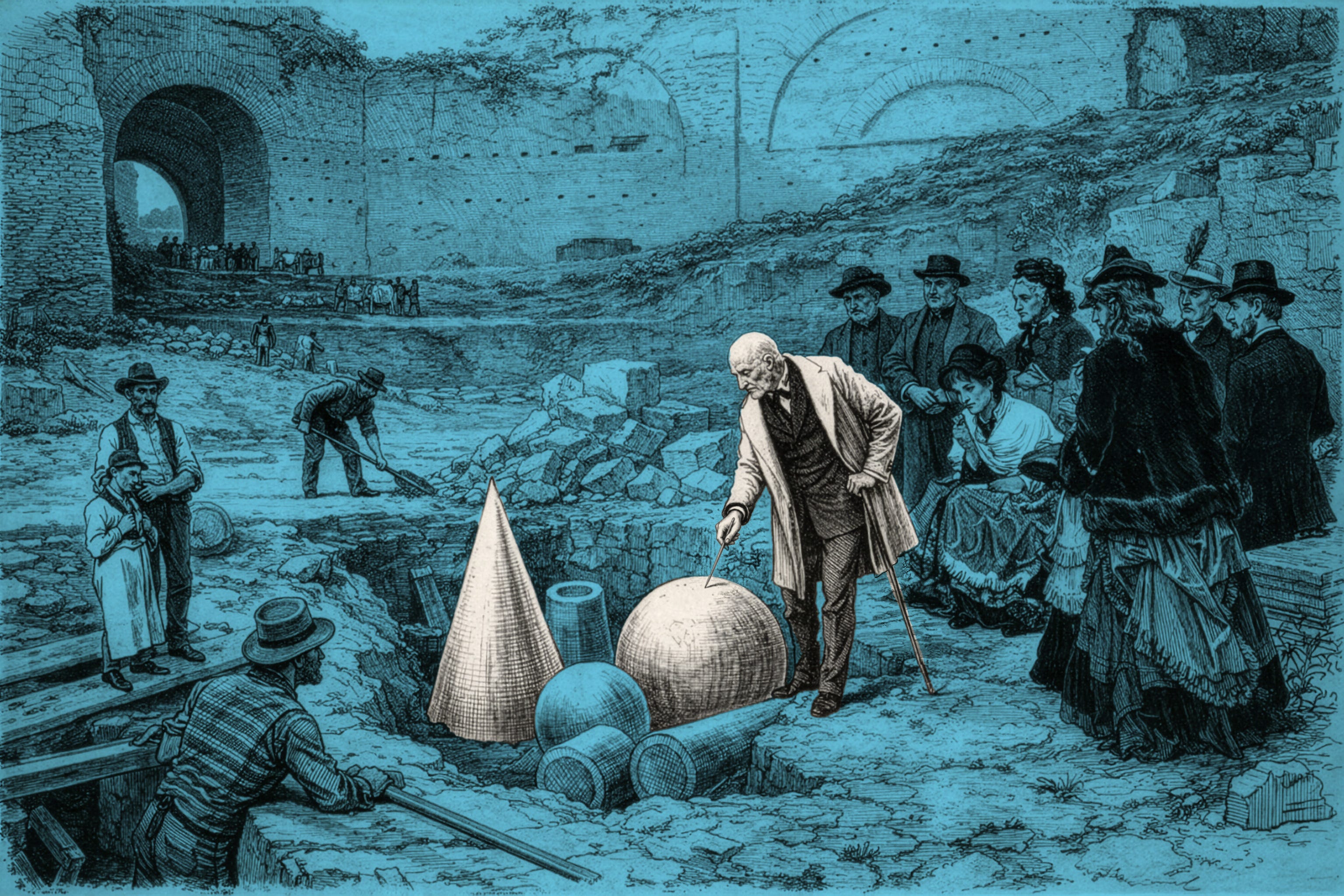
George Newman is a Yale-trained cognitive scientist and author of How Great Ideas Happen: The Hidden Steps Behind Breakthrough Success. We interviewed him on Design Better to talk about his research on the creative process, and he offered a metaphor that reframes creativity: it’s not invention, it’s archaeology.
Ideas Are Already Out There
There were all of these quotes from everybody ranging from Stephen King, who talked about creativity as archaeology in his stories, to Edison talking about, ‘I’ve invented nothing. There’s no such thing as ideas being brain-borne.’ You have all these creatives talking about the notion of discovery. — George Newman
When George sat down to map what cognitive science actually tells us about creativity, the data supported this archaeological view: “It conjured these ideas like archeology—almost as if ideas are out there in the world. And there’s a series of steps or a process that we can go through to uncover them.”
In our exploration of the creative process, which we started in 2023, guests like OK Go, Autumn Durald Arkapaw, Tycho, and others talk about discovering creativity through the subconscious.
He discovered a practical framework that changes how we approach creative work. If ideas exist as latent possibilities waiting to be discovered, then the question isn’t “How do I create something from nothing?” but rather “How do I systematically search the landscape?”
Listen to George Newman and some of our creative process episodes
George Newman: Spotify, Apple Podcasts, Substack
OK Go, Damien Kulash and Tim Nordwind : Spotify, Apple Podcasts, Substack
Tycho, Scott Hansen: Spotify, Apple Podcasts, Substack
Join the conversation about this interview in our chat room. →

Design Better is brought to you by Wix Studio, the most powerful web design platform for entrepreneurs, agencies, and creative thinkers. Learn more →
The Four Steps of Creative Archaeology
George breaks down the archaeological creative process into four distinct stages:

1. Surveying: Getting the Lay of the Land
“This is something that really comes about through expertise. When we’re really understanding a discipline and especially learning where have other great ideas been found, we kind of orient ourselves to those spaces.”
Archaeologists need to do a broad survey of the area they are exploring to orient themselves, but also pay attention to the smallest details that could influence how they approach the dig site.
"I talk about this notion of close looking, which is exactly that. And so it's like attending to the landscape, attending to the environment around us, with...a lot of focus, with a lot of attention to all of those little details."

2. Gridding: Searching Systematically
“Just like an archeologist strings up pieces of twine to create those little rectangles and then goes through each one systematically—can we do the same thing with an idea space? Using the constraints of the problem and a clear idea about what you’re doing and who it’s for, using that as a way to search systematically through a space.”
