


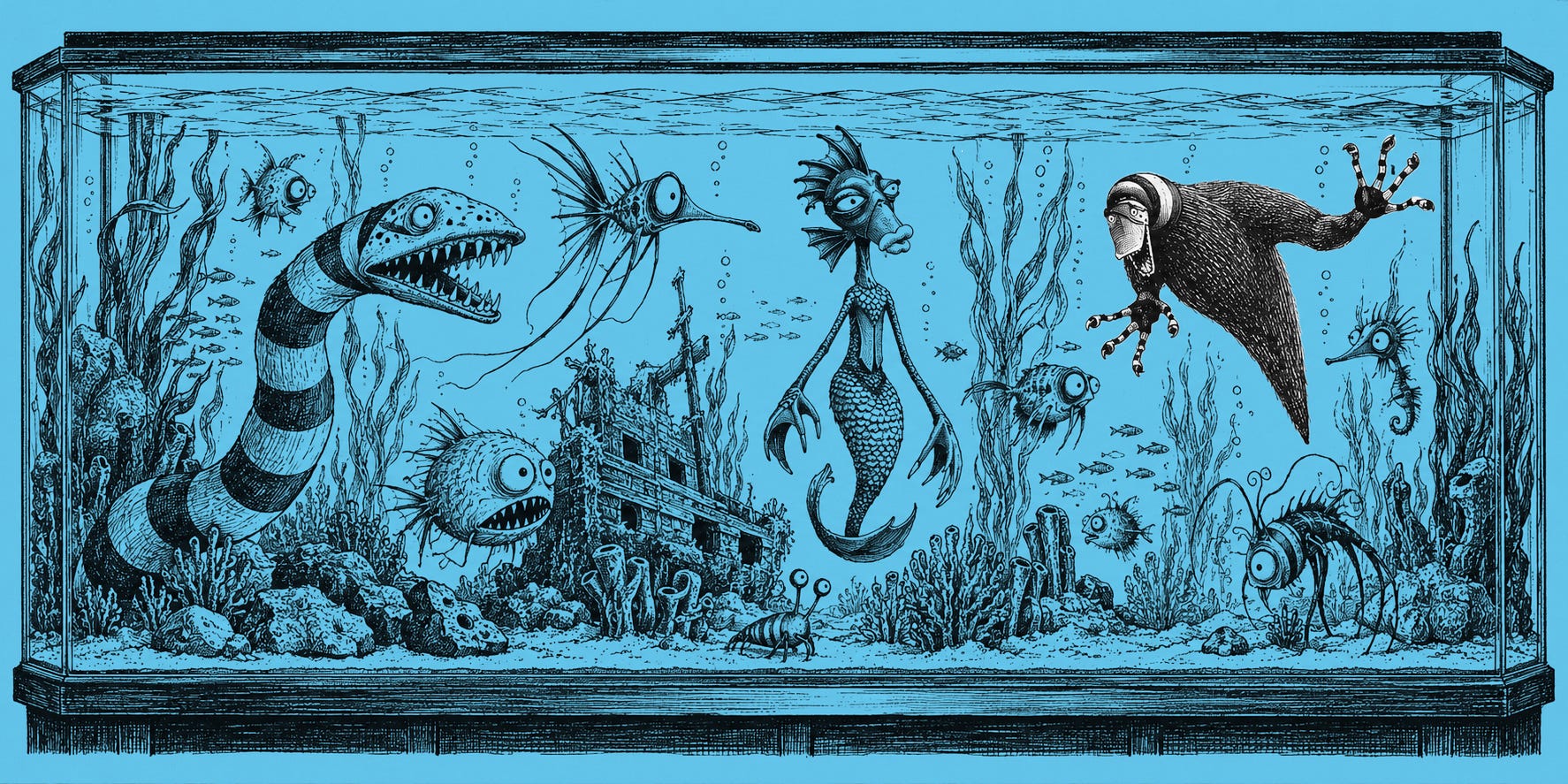
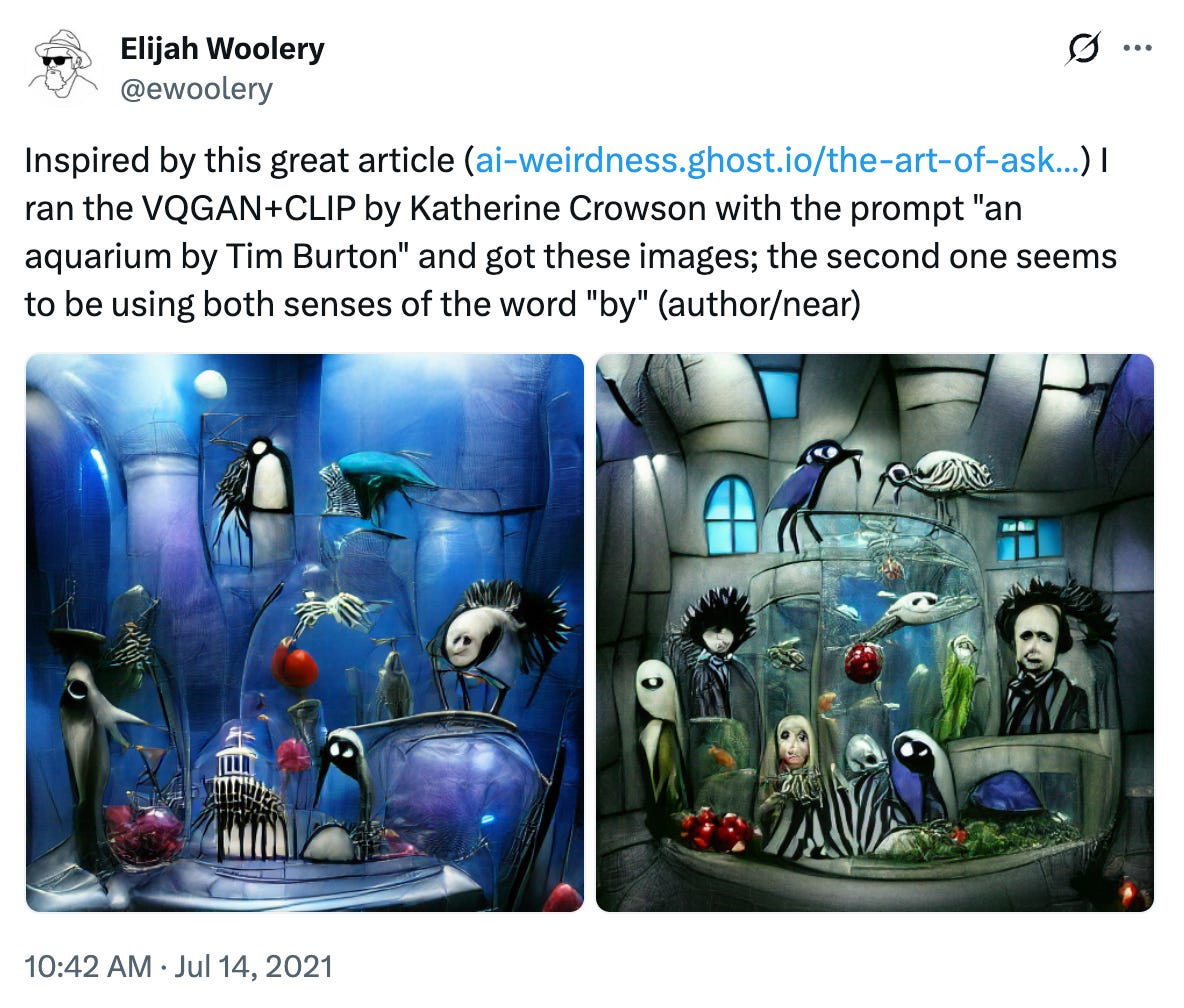
GenAI technology has been moving so quickly it’s easy to forget how weird it was when it all began. Way back in 2021, when dinosaurs still roamed the earth and X was still Twitter, I experimented with some early prompt-based image generation tools and got these bizarre (but at the time, oddly compelling) results:
As the tools got better, I got more and more curious about how they would continue to influence our work as designers and creatives. In the summer of 2024, my friend and colleague Bobby Hughes and I started running workshops to explore how these tools might integrate with the design thinking process: where did they work well, where were they counterproductive.
In this special edition of The Roundup, Bobby shares what we learned in those early workshops and how they evolved as we kept running them. We’re also previewing two workshops coming up next month—and one in the works—for anyone who wants to strengthen their creative confidence by researching, designing, and building with AI.
If you’re eager to jump straight to the workshops, learn more here:
AI x Influence for Design Researchers (next session Nov 17th-20th)
The Humans vs. AI (an ongoing free mini workshop)
Build with AI (two hands-on workshops for designers who want to build and ship functional prototypes and real software with AI)
We’re also wrapping up our 2026 State of Design Survey. Respond now to get access to the report when it comes out:

Staying human-centered in the AI era
by Bobby Hughes
When we started running AI x Design Thinking workshops in 2024, we were as new to AI as anyone else, so we were driven by our own curiosity as much as expertise.
In the early days of the AI boom, we saw a familiar pattern typical of many new technologies…an obsession with what the tech could do, (Make me a poem in a pirate voice! Generate an image of a baby with adult legs!) and what it could not do - including where it hilariously failed.
But given our human-centered bias, we were more interested in what designers might want AI to do for us. How do we use AI as a tool rather than a toy? How might it help us do better design work? Not just more faster, but how might it help us as designers be more human-centered, more compelling, more influential?