


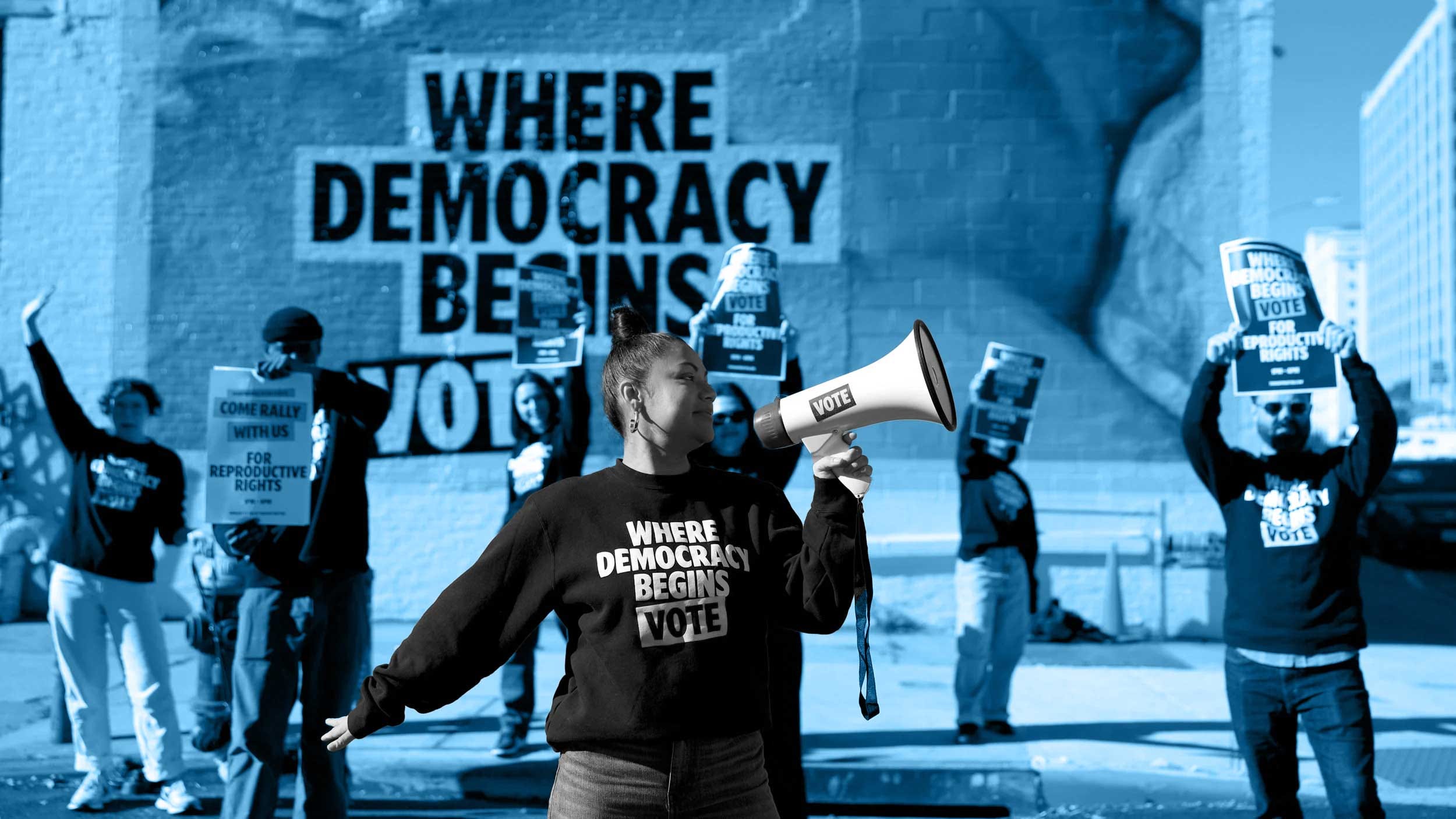
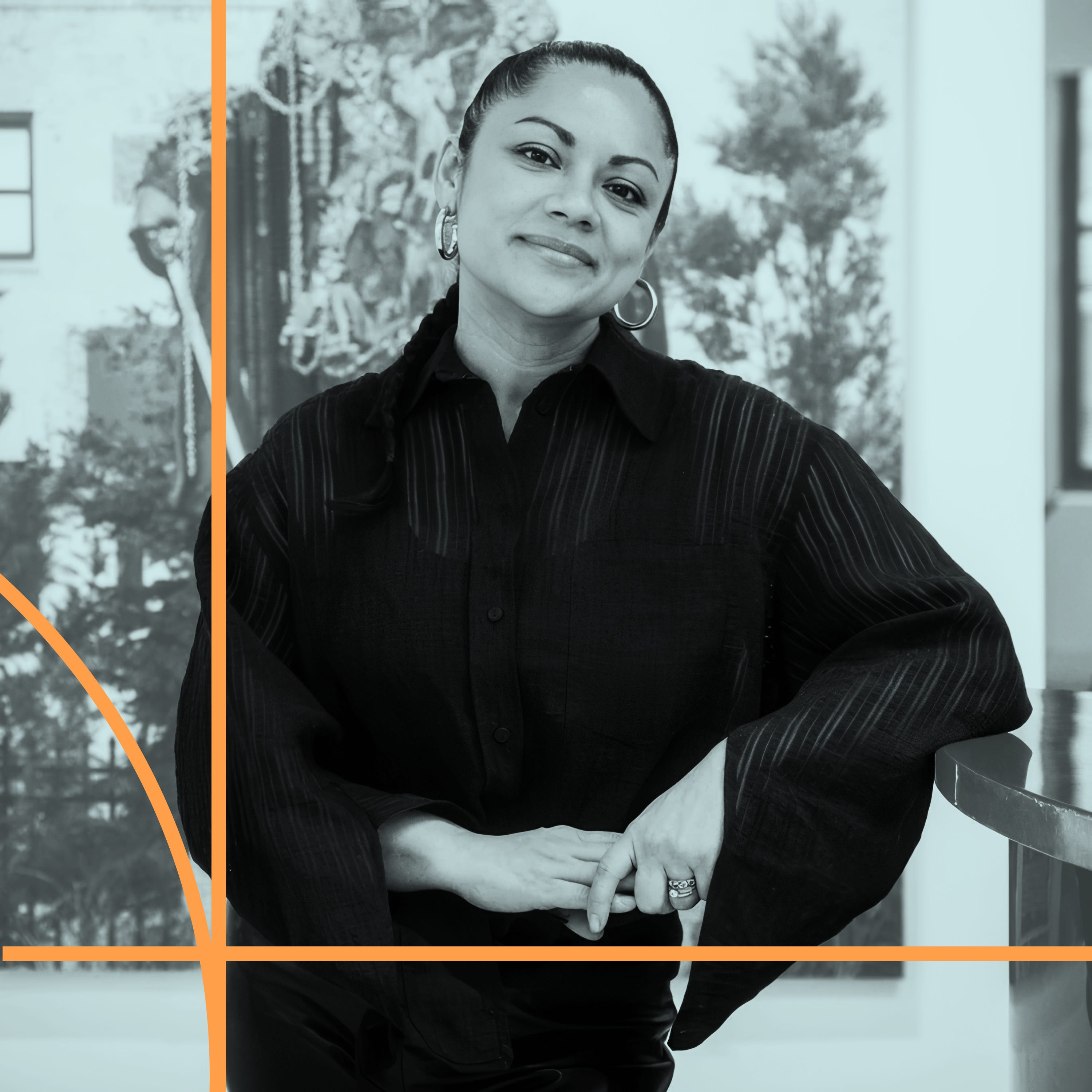
This week on the show, Aarron and Eli talked with Jessie McGuire, managing partner of Thought Matter, the New York studio whose decade of civic, neighborhood, and cultural work just earned the 2026 National Design Award for Communication Design from Cooper Hewitt, Smithsonian Design Museum. An important question kept surfacing in the conversation: how does a studio committed to doing work that's good for the world actually keep the lights on? Jessie makes the case below , in her own words, that this is the wrong question. And then she tells us what the right one is.
Plus, at the end we share some amazing job opportunities for designers.
Listen to the episode and join the conversation
Jessie McGuire: Spotify, Apple Podcasts, Substack
Already a paid subscriber? Follow this link to set up you premium feeds on Apple, Spotify or any other platform from your phone or computer.
Join the conversation about this interview in our chat room. →
Who funds the future?
by Jessie McGuire
There’s an assumption buried inside one of the questions I get asked most often: that design for the public good and design that pays are fundamentally in tension. That civic work is charity. That community-centered projects are a tax you levy on your profitable clients.
I’ve come to think this framing gets almost everything backwards.
Running Thought Matter for the past decade — making payroll, supporting a team, finding the right clients — I’ve found that the most meaningful projects don’t exist despite funding constraints. They exist because someone, or more often several someones, decided to put money behind something before its full value was obvious. That’s not charity. That’s how culture gets made.
What it means to show up
In the fall of 2016, like a lot of designers in New York, we were shaken by the election results. Our founder, a journalist before he became an agency owner, pushed us: if you don’t like what’s happening, you go into the streets. You figure out where your values are and you show up.
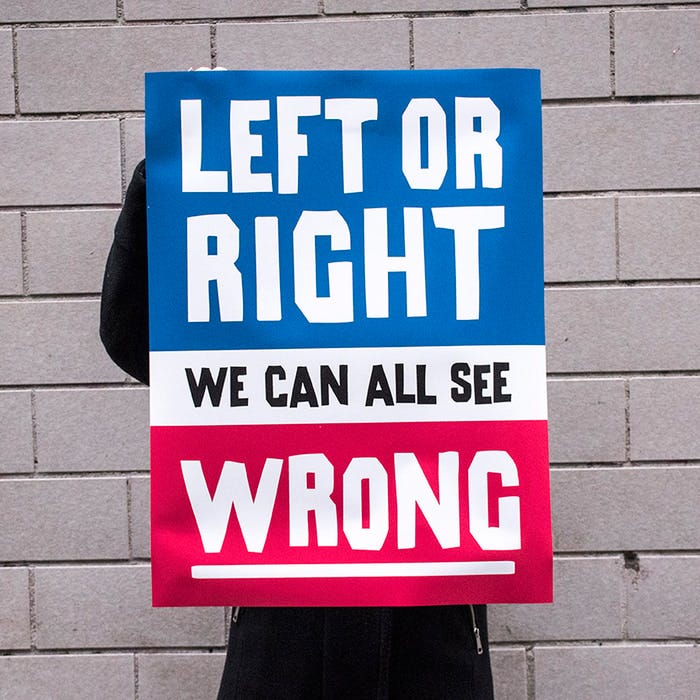
So we made posters. We did a Kickstarter for the Women’s March in Washington in January 2017, which turned out to be one of the largest demonstrations in American history, though we didn’t know that yet, raised tens of thousands of dollars, and printed 15,000 posters. Designers contributing visual communication on behalf of something they believed in.
That project lit something. We came off it asking: what else can we do?
The question that launched the Constitution project
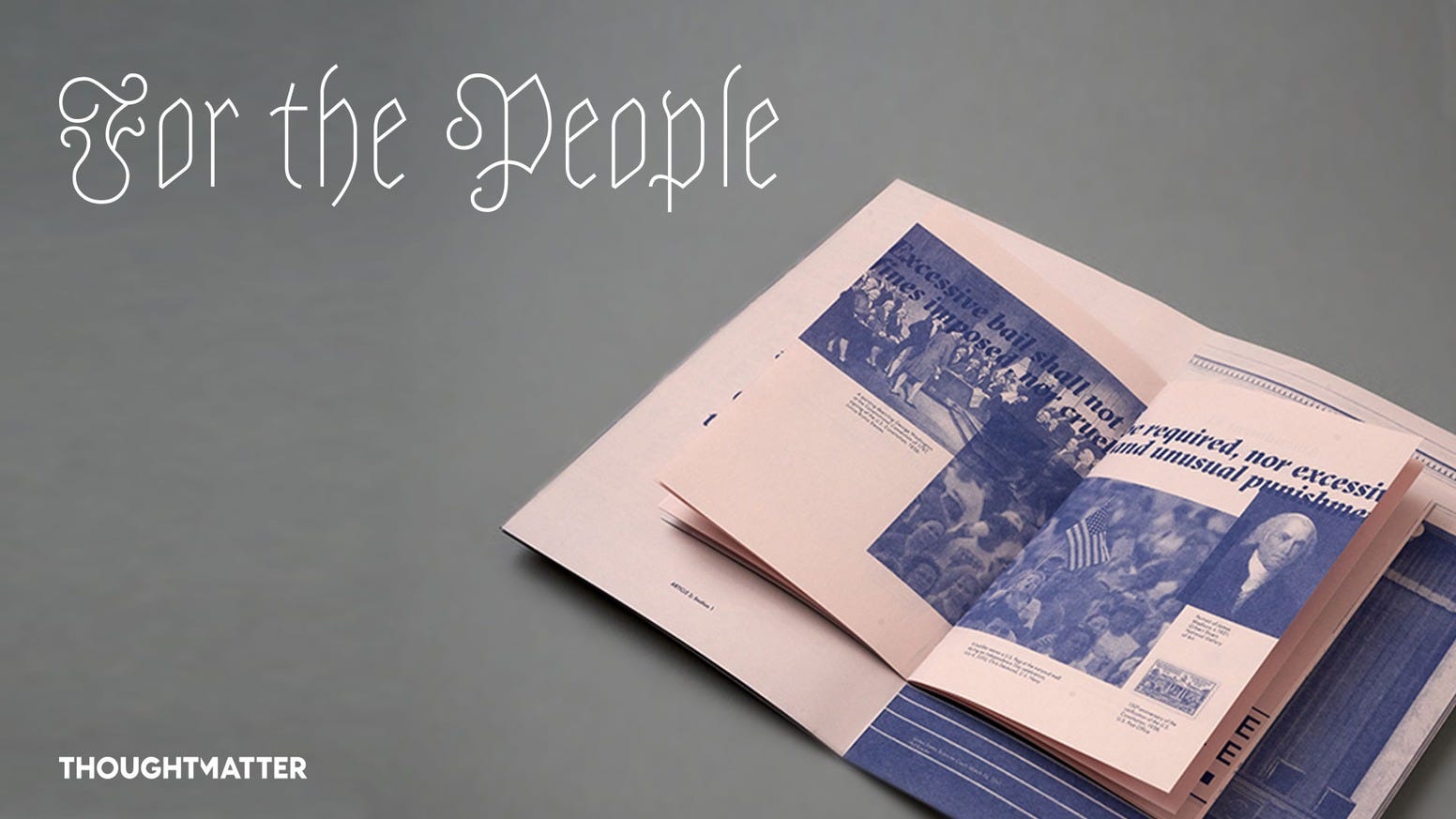
A few months later, in the spring of 2017, the headlines were full of variations on the same question: has the new president even read the Constitution? We were sitting around the conference room table — we do that every week, looking at newspaper clippings, talking about what we want to see in the world — and someone asked: well, have we read it?
We ordered 25 copies. They all arrived at the studio looking identical. Small type. No imagery. Poor paper. Dense, utilitarian, forgettable. As designers, we knew we could do better. And we knew it mattered.
A Kickstarter raised enough to design, print, and donate 3,000 redesigned copies to New York City public schools. Buy one, we donate one. A paper company contributed materials. Our team contributed their time. We used a Risograph press and thought carefully about every detail — paper stock, typography, a fold-out insert for the Bill of Rights — to give the document the physical presence it deserved.
The design question we kept coming back to: how do you make something that people actually want to touch and find out more about? Not a political statement, not a rebrand — just a document that invites participation. We wanted a 13-year-old to open it and feel like it had something to do with him.
“Design is how we shape who feels invited. It’s how we think about who’s informed.”
Then we asked twelve designers we most admired — Milton Glaser, Seymour Chwast, Jessica Hische, Adele Rodriguez, and others — to each create a poster for one of the amendments in the Bill of Rights. Every single one said yes. The show ran at Cooper Union during Constitution Week in September 2017.
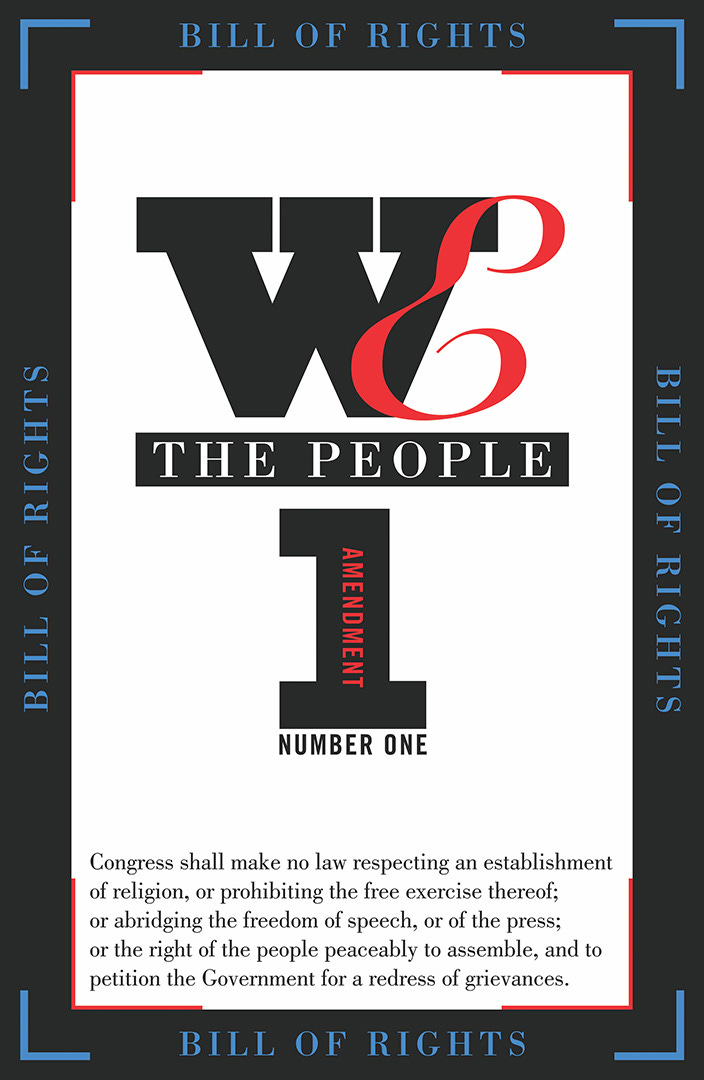
No institution owned that project. It lived because a community decided it mattered enough to show up.
What “shareholders” actually means
The studio has also worked with Business Improvement Districts, the Long Island City Partnership, the Times Square Alliance, the Union Square Partnership, as well as commercial brands, cultural institutions, and advocacy groups. That mix is intentional.
When I talk to potential clients and one of them says the work needs to be guaranteed not to upset their shareholders, I’ve learned to hear that as a signal. What they’re telling me is that they’re not actually committed to anything yet.
When I push on the shareholder question, though, something shifts. Working with cultural institutions, neighborhood organizations, civic groups — the shareholders aren’t a board. The shareholders are the community. They’re the people being affected by whatever the work is doing. That’s who I want to be designing for.
This is also what I mean when I say I want to do the work we want to talk about. Over the years, clients would hear about our civic projects and say: so you just want to do activist work. I’ve been sitting with that framing. We need a new word for it — because design that helps communities see themselves more clearly, that makes civic life more legible and more participatory, shouldn’t require a separate category. It should just be design.
The question behind the question
The most meaningful ideas that have shaped society were usually funded before their return was obvious. Patrons supported artists. Foundations funded journalism. Universities invested in research that didn’t have an application yet. Design belongs in that lineage.
The work that helps people see themselves as citizens rarely happens at the speed of a campaign cycle or a social media reaction. It happens over time, through schools, libraries, museums, neighborhood organizations, public spaces, and the people willing to invest in them before the outcome is easy to measure.
What would it mean to fund the future before it’s profitable? Because by the time something is proven, it’s no longer the future. It’s already the system.
We don’t have to wait to be the organizations willing to invest that way. We can choose to be them right now.
Jessie McGuire is the managing partner of Thought Matter in New York City. She also teaches entrepreneurship at Pratt Institute.
New jobs posted on Design Better Careers
UX/UI Designer at Archetype AI
Full-time · San Mateo, CA
Principal UX Researcher at Upstart
Full-time · Remote, USA · Remote OK · $198,700 – $275,000
Sr. Product Designer, Growth at Life360
Full-time · Remote, USA · Remote OK · $129,000 – $190,000
Senior UX Researcher at GitLab
Full-time · Remote · Remote OK · $130,000 – $145,000
Art Director (Product Design) at Hello Heart
Full-time · Tel Aviv, Israel
Designer, Marketing & Custom Content at Vox Media
Contract · New York, NY · $40/hour
Product Design Program Manager at OpenAI
Full-time · San Francisco, CA · $216,000 – $240,000
Product Designer at Substack
Full-time · San Francisco, CA · Remote OK · $150,000 – $215,000
Product Designer at brand.ai
Full-time · Remote · Remote OK
VP, Product at brand.ai
Full-time · Remote · Remote OK
Designer, Web & Brand at Linear
Full-time · North America · Remote OK · Competitive salary + equity
Principal Product Designer at Linear
Full-time · Europe · Remote OK · Competitive salary + equity
Staff Product Designer, Time Tools at Gusto
Full-time · San Francisco, CA · Remote OK · $146,000 – $222,000
Product Design Manager at Figma
Full-time · Remote, US · Remote OK · https://boards.greenhouse.io/figma/jobs/5790585004?gh_jid=5790585004
Product Designer, Design, Dev, & AI Tools at Figma
Full-time · Remote, US · Remote OK
Product Designer, Growth & Monetization at Figma
Full-time · Remote, US · Remote OK