



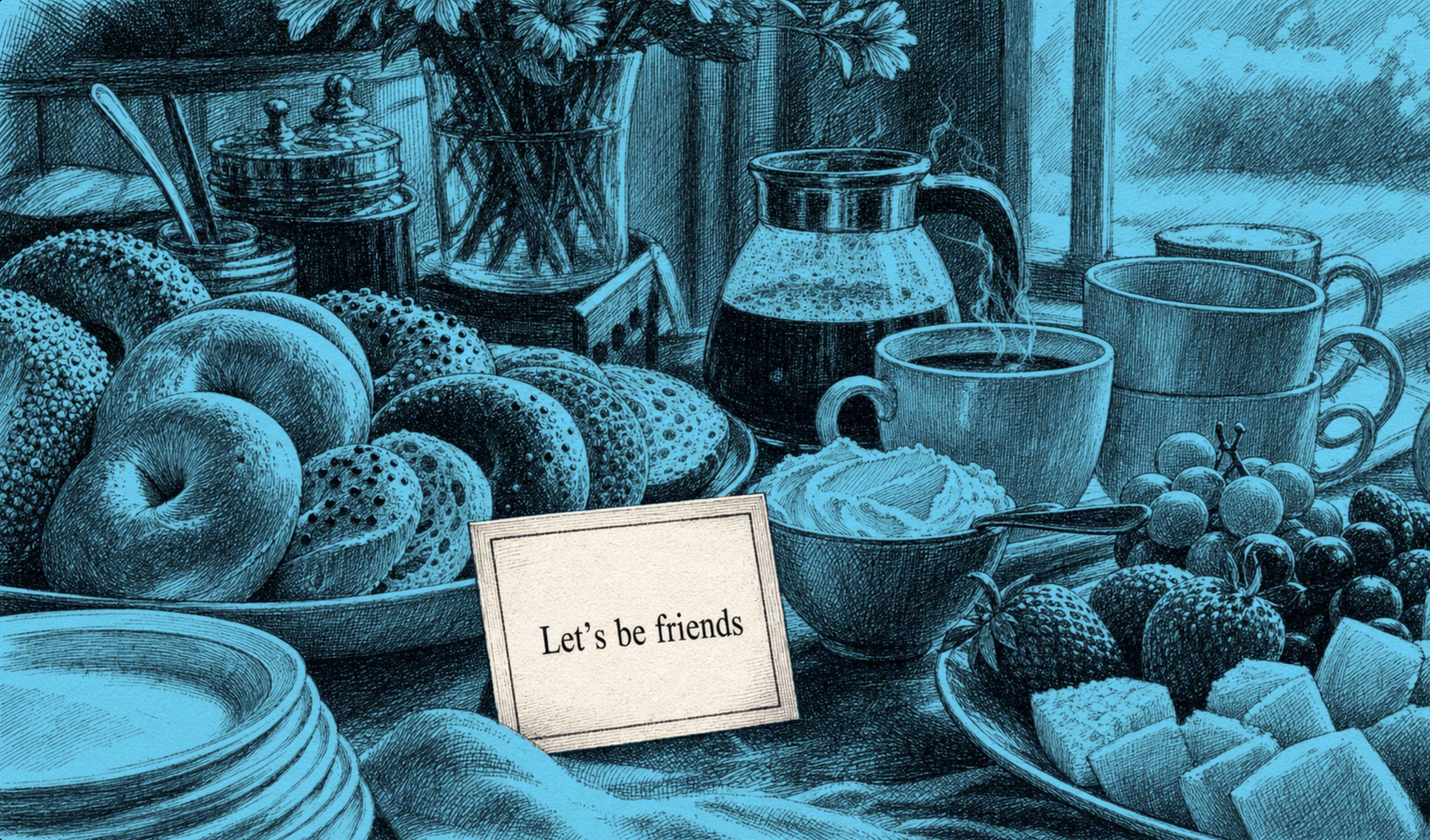
Creativity is a discipline in optimism
When Tina Roth Eisenberg moved to New York from Switzerland in 1999, she kept asking herself one question: where are my people? Eighteen years ago she answered it by starting Creative Mornings — a free monthly breakfast lecture series that has since grown into 252 cities, 70 countries, and roughly 25,000 people gathering every month. She calls it “church for creativity.”
The scale of Creative mornings is astounding, but even more impressive is how little of it she built by controlling anything. Creative Mornings, the Swiss Miss blog she’s kept for 21 years, the Friends Work Here co-working community, Tattly — none of it ran on a growth plan. It ran on trust, friendship, and a stubborn belief that there’s a better way.
That belief turns out to be the through-line. Late in the conversation Tina said the thing this whole issue is really about: creativity is a discipline in optimism. You can’t make something better unless you first believe better is possible. Here’s what that looks like in practice.
Listen to the episode and join the conversation
Tina Roth Eisenberg: Spotify, Apple Podcasts, Substack
Already a paid subscriber? Follow this link to set up you premium feeds on Apple, Spotify or any other platform from your phone or computer.
Join the conversation about this interview in our chat room. →

Join Eli and Aarron September 28–29 in Sonoma for the September Work(shop) Leadership Excursion — an intimate, conversation-first gathering of forty design leaders in the heart of wine country, built to challenge how you think about your craft and the coalitions behind it. Only a handful of tickets remain — see the lineup and reserve your spot.
1. The metric is friendship
Most communities die because their organizers measure the wrong things — headcount, engagement, reach. Tina measures one thing, and it’s a joke that turned out to be the strategy.
“The only thing I measure is ROF — return on friendship.”
She told us about a night last year when Timothy Goodman spoke at Parsons to 475 people. She ran a live, in-the-room data visualization: stand up if you’ve ever made a friend at a Creative Mornings event. Out of 475, about 450 stood up. That’s the whole business model. Not attendance — belonging.
It tracks with something Bill Burnett told us about what he calls a formative community: “a group of people who get together to help each other become better people… deeply interested in each other’s journey.” The opposite of a networking room, where everyone’s performing their résumé. If you’re building a community — and a lot of you are, internally or otherwise — the design question isn’t how to get people in the door. It’s whether anyone leaves with a friend.
2. Communities scale on trust, not control
When the first stranger knocked on Tina’s door asking to bring Creative Mornings to their city, her instinct was to clamp down. Will they keep it safe? Will they translate the values? What she did instead is the most transferable lesson in the conversation: she wrote down the non-negotiables, and then handed away everything else.
